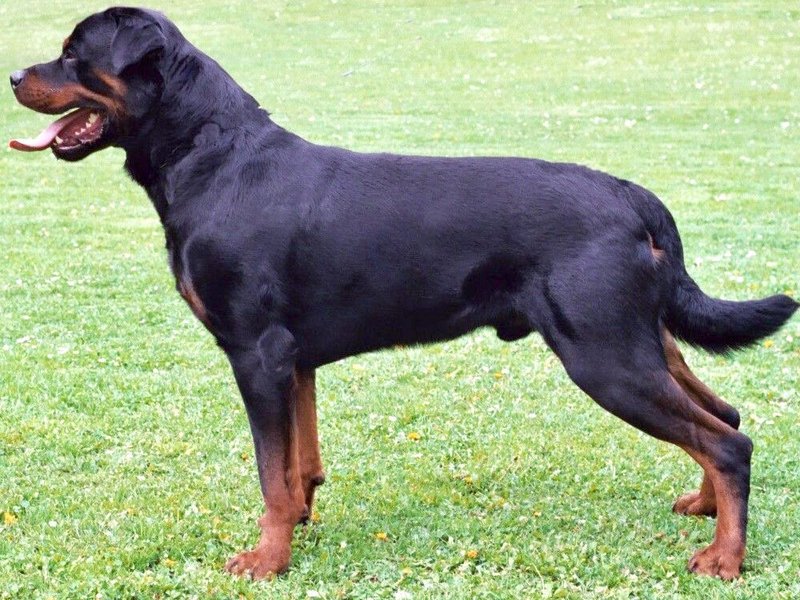
Rottweiler
Size
large
Weight
80-135 lbs
Height
22-27 inches
Lifespan
9-10 years
Activity Level
Grooming
The Rottweiler is one of the most powerful, intelligent, and misunderstood dog breeds in the world. Behind the muscular build and serious expression is a dog of remarkable depth — fiercely loyal to family, surprisingly sensitive, and capable of a gentleness that contradicts every negative stereotype. Rottweilers consistently rank among the AKC’s top 10 most popular breeds, a testament to the devotion of owners who know the breed’s true nature.
But Rottweilers are not a breed for everyone. They are large, strong, protective dogs that require experienced ownership, early socialization, and consistent training. An untrained, unsocialized Rottweiler is a significant liability; a well-raised one is among the finest companion dogs you will ever encounter. This guide covers everything you need to know about owning, training, and caring for a Rottweiler — honestly and completely. If you are bringing a puppy home, start with our first week with your new puppy guide to lay the right foundation from day one.
History and Origins
The Rottweiler is one of the oldest herding breeds, with a lineage that traces back to the drover dogs of the Roman Empire. As Roman legions marched across Europe, they brought herds of cattle for food — and the large, sturdy dogs that moved and guarded those herds. When the legions passed through what is now southern Germany, some of these dogs were left behind and bred with local working dogs.
The breed takes its name from the town of Rottweil in the Wurttemberg region of Germany. For centuries, Rottweil was a major cattle trading center, and the dogs that drove cattle to market, guarded the butchers’ money pouches (tied around the dog’s neck for safekeeping), and pulled carts loaded with meat became known as “Rottweiler Metzgerhund” — Rottweil butcher’s dogs.
When railroads replaced cattle drives in the mid-19th century, the Rottweiler nearly went extinct. The breed was saved by its versatility — Rottweilers transitioned into police work, military service, and personal protection, roles their intelligence, strength, and trainability made them naturally suited for.
The AKC recognized the Rottweiler in 1931, but the breed remained relatively uncommon in America until the 1980s, when a surge in popularity made it one of the most registered breeds in the country. That popularity boom brought problems — irresponsible breeding to meet demand produced dogs with unstable temperaments, fueling negative stereotypes that the breed still contends with today.
Today, responsible Rottweiler breeders prioritize temperament, health testing, and breed standard compliance. Well-bred Rottweilers are confident, calm, and discerning — dogs that assess situations before reacting, protect their families without unprovoked aggression, and form deep bonds with the people they love.
Temperament and Personality
The Rottweiler’s temperament, when properly bred and raised, is one of the breed’s greatest assets. The AKC breed standard describes the ideal Rottweiler as “a calm, confident, and courageous dog with a self-assured aloofness that does not lend itself to immediate and indiscriminate friendships.”
What Makes Rottweilers Special
Calm confidence. A well-bred Rottweiler exudes quiet confidence. They observe their environment with intelligence and awareness, assessing situations before reacting. This measured temperament is what makes them excellent working dogs — they don’t panic, they don’t overreact, and they think before they act. In a home setting, this translates to a dog that is steady, reliable, and unflappable in most situations.
Deep loyalty. Rottweilers are among the most loyal breeds. They bond profoundly with their families and are devoted in a way that goes beyond simple affection. A Rottweiler will follow you from room to room, lean their considerable weight against you on the couch, and position themselves between you and anything they perceive as a threat. This loyalty is unconditional and lifelong.
Natural protectiveness. Rottweilers are inherently protective of their families and territory. This is not trained behavior — it is hardwired. A well-socialized Rottweiler distinguishes between genuine threats and normal social interactions, responding appropriately to each. They are watchful without being aggressive, alert without being anxious, and protective without being paranoid.
Intelligence and trainability. Rottweilers are highly intelligent dogs that learn quickly and retain training well. They are used as police dogs, search and rescue dogs, therapy dogs, and service dogs — roles that demand both intelligence and reliability. In the home, this intelligence makes them responsive to consistent, positive training methods.
Surprising gentleness. Many people are surprised by how gentle Rottweilers are with their families. The “Rottie lean” — where the dog presses their full body weight against a beloved person — is a signature display of affection. Well-raised Rottweilers are patient with children, gentle with elderly family members, and often remarkably tender with smaller animals they consider part of their household.
Potential Challenges
Strength and size. An adult Rottweiler weighing 80-135 pounds with a powerful build is a formidable physical presence. This size demands responsible management. An untrained Rottweiler that pulls on leash, jumps on people, or is poorly socialized is not just an inconvenience — it is a genuine safety concern. Training and socialization are not optional with this breed.
Protective instincts require management. While natural protectiveness is an asset, it requires proper socialization and training to channel appropriately. An unsocialized Rottweiler may perceive normal visitors, delivery drivers, or other dogs as threats and react accordingly. Early, extensive socialization teaches the dog to distinguish between real danger and everyday life.
Breed-specific legislation. Rottweilers are subject to breed-specific legislation (BSL) in some municipalities, and they may face restrictions in rental housing and with certain homeowner’s insurance policies. Research local regulations and insurance requirements before committing to the breed.
Same-sex aggression. Some Rottweilers, particularly males, can be aggressive toward dogs of the same sex. Careful socialization and management are needed in multi-dog households. Opposite-sex pairings generally work better.
Stubbornness. Rottweilers are intelligent enough to test boundaries. They need an owner who provides consistent, fair leadership — not through intimidation, but through clear expectations, consistent enforcement, and positive reinforcement. A Rottweiler that senses inconsistent leadership will make their own decisions, which is not ideal given their size and strength.
Care Needs
Exercise Requirements
Rottweilers are working dogs that need substantial daily physical and mental activity:
- Daily exercise: 1-2 hours, split between walks, structured play, and training
- Ideal activities: Brisk walks, jogging (once fully grown), swimming, hiking, fetch, tug-of-war, obedience training, cart pulling, tracking, nose work, agility
- Activities to avoid: Forced running or jumping for puppies under 18 months (to protect developing joints), intense exercise in extreme heat, and unsupervised off-leash time in unfenced areas until recall is rock-solid
Mental stimulation is equally important. Rottweilers need a job — whether that’s formal obedience work, nose work, trick training, or structured household tasks. A Rottweiler with nothing to do is a Rottweiler finding something to do, and their choices rarely align with yours. Puzzle toys like a stuffed KONG, training sessions, and interactive games keep their powerful minds engaged. Enrichment toys and training gear make excellent gifts—explore our best gifts for dog lovers guide for ideas.
Rottweiler puppies should not be over-exercised. A common guideline is 5 minutes of structured exercise per month of age, twice daily. Over-exercising growing puppies damages developing joints and increases the already-high risk of orthopedic problems. Free play in the yard at the puppy’s own pace is fine.
Grooming Needs
Rottweilers are a low-maintenance breed in the grooming department:
- Coat brushing: Once per week with a bristle brush or rubber grooming mitt. Rottweilers have a short, dense double coat that sheds moderately year-round and heavily during spring and fall shedding seasons. During seasonal coat blows, increase brushing to 3-4 times per week. A Furminator deshedding tool is highly effective for managing undercoat shedding.
- Bathing: Every 6-8 weeks or as needed. Rottweilers are generally clean dogs, though they can develop a mild odor if bathing is neglected. See our dog grooming tips guide for bathing best practices.
- Nail trimming: Every 2-3 weeks. Large, active dogs sometimes wear their nails down on pavement, but regular checks are still important.
- Dental care: Brush 3-4 times per week minimum. Our dog dental care guide covers technique and recommended products.
- Ear cleaning: Weekly, checking for redness, odor, or discharge.
Nutrition
Rottweilers are large, muscular dogs with specific nutritional needs:
- High-quality protein: Essential for maintaining the Rottweiler’s substantial muscle mass. Look for formulas with real meat as the first ingredient and protein content of 22-28% for adults. Check our guide to choosing dog food for ingredient analysis help.
- Joint support: Given the breed’s extreme predisposition to hip and elbow dysplasia, foods or supplements containing glucosamine, chondroitin, and omega-3 fatty acids are important throughout the dog’s life. Our Blue Buffalo Life Protection review covers a formula with added joint support.
- Bloat prevention: Rottweilers are at elevated risk for Gastric Dilatation-Volvulus (bloat). Feed two or three smaller meals per day instead of one large meal, use a slow-feeder bowl, and avoid vigorous exercise for at least one hour before and after meals.
- Large-breed puppy food: Critical during growth. Large-breed puppy formulas have controlled calcium and phosphorus levels that support proper skeletal development. Rapid growth increases orthopedic risk.
- Weight management: Despite their muscular build, Rottweilers can become overweight, especially as they age and activity decreases. Excess weight compounds joint problems. Monitor body condition and adjust portions as needed.
Health Considerations
Rottweilers are prone to several serious health conditions that prospective owners must understand:
Hip and elbow dysplasia. The Rottweiler has one of the highest rates of hip and elbow dysplasia among all breeds. These conditions involve abnormal development of the hip or elbow joint, leading to arthritis, pain, and reduced mobility. Reputable breeders screen all breeding stock through OFA (Orthopedic Foundation for Animals) or PennHIP evaluations. Maintaining a healthy weight, avoiding over-exercising puppies, and providing joint supplements can help manage these conditions.
Osteosarcoma (bone cancer). Rottweilers have a significantly higher risk of osteosarcoma than most breeds. This aggressive bone cancer most commonly affects the long bones of the legs and is typically diagnosed in middle-aged to older dogs. Symptoms include persistent lameness, swelling at the tumor site, and pain. Treatment usually involves amputation and chemotherapy, and the prognosis is guarded. Early detection through regular veterinary checkups is important.
Heart conditions. Aortic stenosis and sub-aortic stenosis (SAS) — narrowing of the aortic valve or the area just below it — occur at elevated rates in Rottweilers. These conditions range from mild (no treatment needed) to severe (risk of sudden death). Cardiac screening by a veterinary cardiologist is recommended for breeding stock and should be part of regular health monitoring.
Bloat (GDV). Gastric Dilatation-Volvulus is a life-threatening emergency where the stomach fills with gas and twists. Deep-chested breeds like Rottweilers are at higher risk. Signs include unproductive retching, distended abdomen, restlessness, excessive drooling, and signs of pain. This requires immediate emergency veterinary care — minutes matter. Discuss prophylactic gastropexy (surgical stomach tacking) with your veterinarian, as this procedure can be performed during spay/neuter surgery.
Hypothyroidism. An underactive thyroid gland causing weight gain, lethargy, coat changes, and skin problems. Diagnosed with a blood test and managed with daily medication.
Cruciate ligament rupture. The cranial cruciate ligament (similar to the ACL in humans) can partially or fully rupture, causing sudden hindquarter lameness. Rottweilers’ size and activity level make them susceptible. Surgical repair is typically required.
Training Tips for Rottweilers
-
Socialization is the single most important thing you will do. Begin socializing your Rottweiler puppy from the day you bring them home and continue throughout their life. Expose them to different people of all ages and appearances, other dogs, various environments, sounds, and situations. A well-socialized Rottweiler is a confident, friendly, discerning dog. An unsocialized one is a potential liability.
-
Establish consistent leadership through positive methods. Rottweilers need clear, consistent boundaries, but dominance-based training (alpha rolls, leash corrections, intimidation) is counterproductive and potentially dangerous with this breed. It does not build respect — it builds fear and defensiveness. Use positive reinforcement: reward what you want, redirect what you don’t, and be consistent.
-
Enroll in formal obedience training. A structured obedience class is strongly recommended for all Rottweiler puppies, regardless of the owner’s experience level. Group classes provide socialization opportunities, and a professional trainer can help you establish good communication with your dog.
-
Teach impulse control from day one. A 10-pound Rottweiler puppy jumping on you is cute. A 120-pound adult doing the same is dangerous. Teach “sit,” “wait,” “leave it,” and “place” before the puppy reaches a size where these behaviors become unmanageable.
-
Provide mental work. Rottweilers are working dogs that need mental challenges. Obedience drills, trick training, nose work, and structured tasks give them purpose. A Rottweiler that feels useful and engaged is a happy, well-behaved dog.
-
Never use aggression to manage aggression. If your Rottweiler displays concerning behavior — resource guarding, leash reactivity, or aggression toward people or dogs — seek help from a certified professional dog trainer or veterinary behaviorist immediately. Do not attempt to correct aggression with physical punishment, which will escalate the problem.
Is a Rottweiler Right for You?
Good Fit If:
- You have previous experience owning and training large, powerful dogs
- You can commit to early, extensive, and ongoing socialization
- You want a loyal, protective companion that bonds deeply with the family
- You can provide 1-2 hours of daily exercise and regular mental stimulation
- You have older children (age 8+) who understand how to interact with large dogs
- You are home frequently or can arrange for companionship during the day
- You are willing to invest in professional obedience training
- You are prepared for potentially significant veterinary costs, particularly related to orthopedic and cardiac conditions
- You have researched and can comply with any local breed-specific legislation
May Not Be Right If:
- You are a first-time dog owner (consider a more forgiving breed like a Labrador Retriever or Golden Retriever first)
- You cannot commit to extensive socialization and consistent training
- You want a dog that is immediately friendly with all strangers and dogs
- You have very young children (the sheer size creates accidental injury risk)
- You live in a jurisdiction with breed-specific legislation banning or restricting Rottweilers
- You travel frequently and cannot bring your dog or arrange experienced care
- You are not prepared for the financial responsibility of a breed with significant health predispositions
- You want a dog you can leave to their own devices without training or structure
You Might Also Like
- German Shepherd Breed Guide — Another intelligent, loyal working breed with similar training needs
- Boxer Breed Guide — A similarly playful and family-oriented working breed
- Labrador Retriever Breed Guide — A more beginner-friendly large breed for comparison
- Furminator Deshedding Tool Review — The best tool for managing Rottweiler shedding
- Best Dog Grooming Tips — Coat care, nail trimming, and ear cleaning for double-coated breeds
- How to Choose Dog Food — Navigate ingredient labels and find the right large-breed formula
- Best Dog Toys for Aggressive Chewers — Heavy-duty toys that can withstand Rottweiler jaw strength
Frequently Asked Questions
Recommended Products for Rottweilers
Barking Goods is reader-supported. When you buy through links on our site, we may earn an affiliate commission at no extra cost to you. As an Amazon Associate I earn from qualifying purchases. Learn more.
Blue Buffalo Life Protection Formula Large Breed
Contains glucosamine and chondroitin for joint support, which is critical for a large breed highly prone to hip and elbow dysplasia. Real chicken as the first ingredient provides the protein needed to maintain the Rottweiler's muscular build.
KONG Classic (X-Large)
Rottweilers are powerful chewers that destroy lesser toys in minutes. The KONG Extreme's durable rubber withstands heavy jaws, and stuffing provides mental enrichment for this intelligent working breed.
Furminator Undercoat Deshedding Tool (Large, Short Hair)
Rottweilers have a dense double coat that sheds heavily twice a year. The Furminator removes up to 90% of loose undercoat and significantly reduces household shedding during seasonal coat blows.
Rabbitgoo No-Pull Dog Harness
At 80-135 lbs, an untrained Rottweiler on a standard leash is nearly impossible to control. A no-pull harness gives the handler leverage and control during training while distributing pressure safely across the chest.
Nutramax Cosequin Maximum Strength Joint Supplement
Given the Rottweiler's extreme predisposition to hip and elbow dysplasia, a quality glucosamine-chondroitin supplement started in early adulthood can support joint health and may slow the progression of degenerative joint disease.
Health Considerations
- Hip and elbow dysplasia
- Osteosarcoma (bone cancer)
- Aortic stenosis/sub-aortic stenosis
- Bloat (GDV)
- Hypothyroidism
- Cruciate ligament rupture
Always consult with your veterinarian about your dog's specific health needs.
Related Breeds
Frequently Asked Questions
Are Rottweilers dangerous?
Are Rottweilers good family dogs?
How much exercise does a Rottweiler need?
Do Rottweilers get along with other dogs?
How long do Rottweilers live?
Why do Rottweilers lean on people?
Get Expert Pet Tips in Your Inbox
Join 10,000+ pet parents. Get weekly product picks, care tips, and exclusive deals delivered straight to your inbox. No spam, unsubscribe anytime.
No spam. Unsubscribe anytime.

Written by
Dr. Sarah ChenVeterinary Editor, DVM
Dr. Sarah Chen is a licensed veterinarian with over 10 years of clinical experience in small animal medicine. After earning her Doctor of Veterinary Medicine degree from Cornell University, she spent seven years in private practice before transitioning to veterinary journalism and pet product education. As Barking Goods' Veterinary Editor, Dr. Chen reviews all health and nutrition content for accuracy and ensures our recommendations align with current veterinary science. She's a Certified Veterinary Journalist and a member of the American Veterinary Medical Association (AVMA). When she's not reviewing content, she volunteers at her local animal shelter and spoils her two rescue dogs, Mochi and Biscuit.