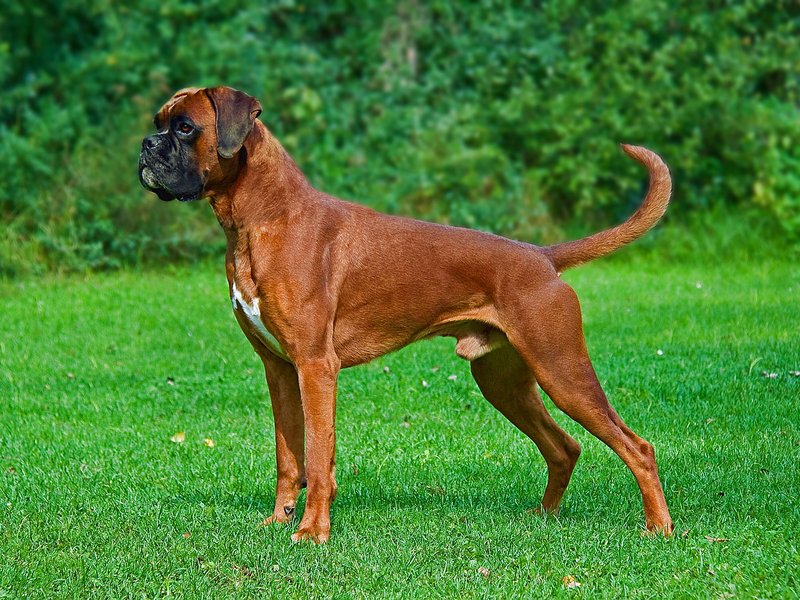
Boxer
Size
large
Weight
50-80 lbs
Height
21.5-25 inches
Lifespan
10-12 years
Activity Level
Grooming
The Boxer is one of the most recognizable and beloved dogs in America — a muscular, athletic breed with the heart of a clown and the soul of a guardian. With their expressive faces, boundless energy, and legendary patience with children, Boxers have earned their consistent place among the AKC’s top 15 most popular breeds. If this is your first dog, our first week with your new puppy guide will help you prepare for the joyful whirlwind that is life with a Boxer puppy.
But Boxers are more than just goofy, lovable goofballs. They’re working dogs with real exercise demands, a brachycephalic breed with heat sensitivity concerns, and unfortunately, a breed with higher-than-average cancer rates. This guide covers the full picture — everything from the Boxer’s fascinating history to the health screenings every Boxer owner should know about.
History and Origins
The Boxer’s lineage traces back to ancient war dogs, but the modern breed as we know it was developed in Germany in the late 19th century. Boxers descend from the now-extinct Bullenbeisser (“bull biter”), a powerful Mastiff-type dog used for hunting large game like wild boar, bear, and deer. These dogs were prized for their ability to hold prey with their wide, powerful jaws until the hunter arrived.
As large-game hunting declined, German breeders crossed the Bullenbeisser with smaller English Bulldogs to create a more versatile, companionable dog. The result was the Boxer — a breed that retained the strength and courage of its ancestors while gaining a more manageable temperament and size.
The breed was officially established in Munich in the 1890s, and the first Boxer breed standard was written in 1904. Boxers were among the first breeds employed by German police and military forces, serving as messenger dogs, guard dogs, and pack carriers during both World Wars.
Boxers arrived in the United States in the early 20th century and gained significant popularity after World War II, when returning soldiers brought the breed home from Europe. The AKC had recognized the Boxer in 1904, but the breed’s true American popularity boom came in the 1950s, when Bangaway of Sirrah Crest won Best in Show at Westminster in 1951, catapulting Boxers into the public spotlight.
Today, Boxers serve primarily as family companions, though they continue to work as service dogs, therapy dogs, and in some cases, search and rescue dogs. Their combination of intelligence, trainability, and human-focused devotion makes them versatile working partners.
Temperament and Personality
The Boxer’s temperament is the breed’s greatest selling point. They manage to be simultaneously playful and protective, energetic and patient, silly and dignified. It’s a combination that makes them uniquely suited to family life.
What Makes Boxers Special
The eternal puppy. Boxers are famous for their prolonged puppyhood. While most breeds begin to settle around age 2-3, Boxers often retain their puppy-like exuberance until age 4 or later. This extended adolescence means years of high energy and silliness, which is delightful if you’re prepared for it and exhausting if you’re not.
Exceptional with children. Boxers have a well-deserved reputation as one of the best breeds for families with children. They are remarkably patient with kids, tolerant of the pulling, climbing, and general chaos that young children bring, and naturally protective without being aggressive. Many Boxer owners describe their dog as a “nanny dog” who watches over children with gentle vigilance.
Loyal and protective. Boxers bond deeply with their families and are instinctively protective. They’re alert to their environment and will position themselves between their family and perceived threats. However, a well-socialized Boxer distinguishes between genuine threats and normal visitors — they’re discerning protectors, not indiscriminate aggressors.
Intuitive and emotionally intelligent. Boxers are remarkably attuned to human emotions. Many owners report that their Boxer seems to know when they’re sad, stressed, or unwell, and will adjust their behavior accordingly — offering quiet companionship when comfort is needed rather than demanding play. This emotional intelligence makes them exceptional therapy dogs.
Playful and entertaining. The Boxer’s signature “kidney bean” wiggle, their clownish antics, and their enthusiasm for play make them one of the most entertaining breeds to live with. They play hard, love games, and have a sense of humor that keeps their families laughing daily.
Potential Challenges
High energy that demands an outlet. Boxers need significant daily exercise, and an under-exercised Boxer will channel that energy into destructive behavior — chewing, digging, jumping, and general household mayhem. This is not a breed for couch potatoes or sedentary households.
Jumping and exuberance. A 70-lb Boxer greeting you at the door with full-body enthusiasm can knock over adults, let alone children or elderly visitors. Teaching “four on the floor” and calm greetings is an essential training priority.
Heat sensitivity. Boxers have a brachycephalic (short-muzzled) facial structure that compromises their ability to cool themselves through panting. They are significantly more vulnerable to heatstroke than long-muzzled breeds, and exercise in warm weather must be carefully managed.
Stubbornness. Boxers are intelligent, but they can also be willful. They’re thinkers who sometimes decide their idea is better than yours. Training requires patience, consistency, and a sense of humor — getting into a battle of wills with a Boxer is an exercise in futility.
Separation anxiety. Boxers are deeply people-oriented and do not do well left alone for extended periods. Eight or more hours of daily isolation can lead to anxiety, destructive behavior, and excessive barking. Boxers do best in homes where someone is present for a significant portion of the day.
Care Needs
Exercise Requirements
Boxers are high-energy working dogs that need substantial daily activity:
- Daily exercise: 1-2 hours of vigorous activity
- Ideal activities: Brisk walks, jogging (once fully grown), fetch, tug-of-war, agility, hiking, off-leash play in enclosed areas, interactive games
- Activities to avoid: Intense exercise in temperatures above 80 degrees F, swimming in deep water without supervision (many Boxers are not natural swimmers), and forced exercise for puppies under 18 months (to protect developing joints)
Mental exercise is equally important. Boxers are smart dogs that get bored easily. Puzzle toys like a stuffed KONG, training sessions, nose work, and interactive games keep their minds engaged. A Boxer that gets both physical and mental exercise is a calm, well-behaved household member. A Boxer that gets neither is a force of destruction.
Heat management is critical. Boxers’ shortened muzzles make heat regulation difficult. On warm days, exercise early in the morning or late in the evening, provide constant access to water, and consider a cooling vest for outdoor activities. Know the signs of heatstroke: excessive panting, drooling, bright red gums, stumbling, or collapse. Heatstroke is a medical emergency.
Grooming Needs
Boxers are one of the lowest-maintenance breeds when it comes to grooming:
- Coat brushing: Once per week with a rubber grooming mitt or bristle brush. Boxers have a short, tight coat that sheds moderately. Regular brushing removes loose hair and keeps the coat shiny.
- Bathing: Every 6-8 weeks or as needed. Boxers are relatively clean dogs, though they can develop a mild doggy odor.
- Wrinkle cleaning: Boxers with deeper facial wrinkles need regular cleaning of the folds around their muzzle to prevent bacterial buildup and skin infections. Wipe with a damp cloth and dry thoroughly.
- Nail trimming: Every 2-3 weeks.
- Dental care: Brush 3-4 times per week minimum. Boxers’ slightly undershot jaws can lead to dental alignment issues. Our dog dental care guide has detailed brushing instructions.
- Ear cleaning: Weekly, checking for redness or odor. For a complete grooming routine breakdown, see our dog grooming tips guide.
Nutrition
Boxers are muscular, active dogs with specific nutritional requirements:
- High-quality protein: Boxers need protein-rich food to maintain their muscular physique. Look for formulas where real meat is the first ingredient. Check our guide to choosing dog food for detailed ingredient guidance.
- Joint support: Given the breed’s predisposition to hip dysplasia, foods containing glucosamine and chondroitin are beneficial, especially as dogs age. Our Blue Buffalo Life Protection review covers a formula with added joint support.
- Bloat prevention: Boxers are at elevated risk for Gastric Dilatation-Volvulus (bloat), a life-threatening emergency. Feed two or three smaller meals per day instead of one large meal, use a slow-feeder bowl, and avoid vigorous exercise for at least one hour before and after meals.
- Calorie management: Despite their high energy, Boxers can gain weight, particularly as they age and exercise decreases. Monitor body condition and adjust portions accordingly.
- Avoid grain-free caution: The FDA has investigated a potential link between grain-free diets and dilated cardiomyopathy (DCM) in dogs, with Boxers being among the breeds flagged. Discuss dietary choices with your veterinarian.
Health Considerations
Unfortunately, Boxers are prone to several serious health conditions, and prospective owners should be aware of these before committing to the breed:
Cancer. This is the Boxer’s most significant health challenge. The breed has one of the highest cancer rates of any dog breed, with mast cell tumors being particularly common. Lymphoma, brain tumors, and hemangiosarcoma also occur at elevated rates. Regular veterinary checkups and vigilance about any new lumps, bumps, or behavioral changes are essential for early detection.
Heart conditions. Boxers are predisposed to several cardiac issues, including Arrhythmogenic Right Ventricular Cardiomyopathy (ARVC, also known as “Boxer cardiomyopathy”), aortic stenosis, and other congenital heart defects. ARVC causes irregular heart rhythms that can lead to fainting or sudden death. Annual cardiac screening by a veterinary cardiologist is strongly recommended.
Hip dysplasia. Abnormal development of the hip joint, leading to arthritis and pain. Reputable breeders screen breeding stock through OFA (Orthopedic Foundation for Animals) evaluations.
Degenerative myelopathy. A progressive neurological disease that affects the spinal cord, causing gradual hindquarter weakness and eventually paralysis. There is no cure, but a DNA test can identify carriers. Responsible breeders test for this condition.
Bloat (GDV). Gastric Dilatation-Volvulus is a life-threatening emergency where the stomach fills with gas and twists. Deep-chested breeds like Boxers are at higher risk. Know the signs: unproductive retching, distended abdomen, restlessness, and drooling. This requires immediate emergency veterinary care.
Hypothyroidism. An underactive thyroid that causes weight gain, lethargy, and coat changes. Diagnosed with a simple blood test and managed with daily medication.
Training Tips for Boxers
-
Start socialization immediately. Expose your Boxer puppy to different people, dogs, environments, sounds, and experiences between 8-16 weeks. Well-socialized Boxers are confident, friendly, and less likely to develop fear-based reactivity. Socialization is especially important for a protective breed.
-
Use positive reinforcement consistently. Boxers respond well to food rewards, play, and praise. They do not respond well to harsh physical corrections, which can damage the trust bond and create a defensive dog. Be firm but fair.
-
Channel their energy into structured activities. Obedience classes, agility training, rally, and nose work give Boxers a constructive outlet for their energy and intelligence. A Boxer with a job is a happy Boxer.
-
Teach impulse control early. Jumping, counter-surfing, and door-dashing are common Boxer behaviors that need to be addressed from puppyhood. Practice “wait,” “leave it,” and “place” commands daily.
-
Be patient with the extended puppyhood. Boxers mature slowly. A 2-year-old Boxer is still mentally a puppy in many ways. Maintain training consistency through the adolescent period — the well-trained adult dog on the other side is worth the effort.
-
Use play as a training tool. Boxers are play-driven, and incorporating games into training keeps them engaged. Tug-of-war (with rules — dog must release on cue) and fetch can both be used as training rewards.
Is a Boxer Right for You?
Good Fit If:
- You have an active family with children and want a dog that thrives in the middle of the action
- You can commit to 1-2 hours of daily exercise, including vigorous play
- You want a loyal, protective companion that bonds deeply with the family
- You have time to invest in training during the breed’s extended puppyhood
- You’re home for a significant portion of the day (or can arrange for company)
- You want a low-grooming-maintenance dog
- You enjoy a dog with personality, humor, and an abundance of enthusiasm
- You’re prepared for potentially significant veterinary costs related to breed-specific health concerns
May Not Be Right If:
- You live a sedentary lifestyle or can’t commit to daily vigorous exercise
- You live in a very hot climate without reliable air conditioning
- You’re away from home for 8+ hours daily (Boxers need companionship)
- You want a calm, low-energy dog
- You’re not prepared for the financial commitment of a breed with elevated health risks
- You want a small, apartment-friendly dog (Boxers are powerful, space-occupying dogs)
- You’re looking for a dog that’s easy to manage without training (untrained Boxers are a handful)
You Might Also Like
- German Shepherd Breed Guide — Another loyal, protective working breed for comparison
- Labrador Retriever Breed Guide — A similarly family-friendly large breed with a different energy style
- Golden Retriever Breed Guide — The classic family dog compared to the Boxer
- Best Dog Grooming Tips — Wrinkle cleaning, coat care, and ear maintenance
- How to Choose Dog Food — Find the right large-breed formula for your Boxer
- Dog Dental Care Guide — Oral health tips for breeds with unique jaw structures
- Best Dog Toys for Aggressive Chewers — Durable toys that can handle Boxer jaw strength
Frequently Asked Questions
Recommended Products for Boxers
Barking Goods is reader-supported. When you buy through links on our site, we may earn an affiliate commission at no extra cost to you. As an Amazon Associate I earn from qualifying purchases. Learn more.
Blue Buffalo Life Protection Formula Large Breed
Contains glucosamine and chondroitin for joint support, essential for a large, active breed prone to hip dysplasia. Real chicken as the first ingredient provides quality protein for maintaining lean muscle mass.
KONG Classic (Large)
Boxers are powerful chewers and highly playful dogs. The KONG's durable rubber withstands strong jaws, and stuffing it with treats provides the mental enrichment this intelligent breed needs.
ChuckIt Ultra Ball (Large)
Boxers are athletic dogs that love vigorous play. The ChuckIt Ultra Ball bounces high and is built to withstand the hard biting and enthusiastic fetching that Boxers bring to every play session.
Ruffwear Swamp Cooler Cooling Vest
Boxers are brachycephalic (short-muzzled) and heat-sensitive. A cooling vest is an essential warm-weather accessory to help regulate body temperature during outdoor exercise.
Rabbitgoo No-Pull Dog Harness
Boxers are strong, enthusiastic pullers. A no-pull harness provides better control during walks without putting pressure on their shortened muzzle and airway.
Health Considerations
- Cancer (especially mast cell tumors)
- Heart conditions (ARVC, aortic stenosis)
- Hip dysplasia
- Degenerative myelopathy
- Hypothyroidism
- Bloat (GDV)
Always consult with your veterinarian about your dog's specific health needs.
Related Breeds
Frequently Asked Questions
Are Boxers good family dogs?
How much exercise does a Boxer need?
Do Boxers drool a lot?
Are Boxers aggressive?
Why do Boxers wiggle their whole body?
How long do Boxers live?
Get Expert Pet Tips in Your Inbox
Join 10,000+ pet parents. Get weekly product picks, care tips, and exclusive deals delivered straight to your inbox. No spam, unsubscribe anytime.
No spam. Unsubscribe anytime.

Written by
Dr. Sarah ChenVeterinary Editor, DVM
Dr. Sarah Chen is a licensed veterinarian with over 10 years of clinical experience in small animal medicine. After earning her Doctor of Veterinary Medicine degree from Cornell University, she spent seven years in private practice before transitioning to veterinary journalism and pet product education. As Barking Goods' Veterinary Editor, Dr. Chen reviews all health and nutrition content for accuracy and ensures our recommendations align with current veterinary science. She's a Certified Veterinary Journalist and a member of the American Veterinary Medical Association (AVMA). When she's not reviewing content, she volunteers at her local animal shelter and spoils her two rescue dogs, Mochi and Biscuit.