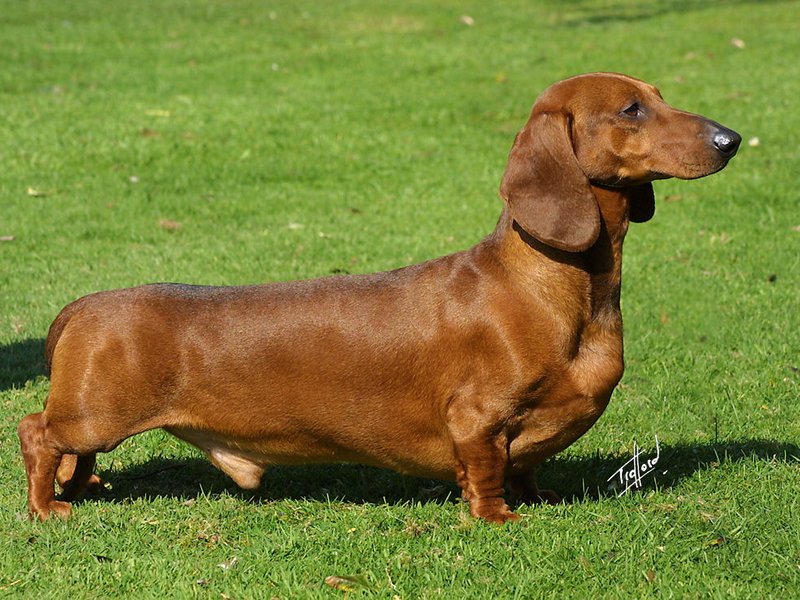
Dachshund
Size
small
Weight
16-32 lbs (standard), under 11 lbs (miniature)
Height
8-9 inches (standard), 5-6 inches (miniature)
Lifespan
12-16 years
Activity Level
Grooming
There’s no mistaking a Dachshund. That long, low-slung body, those impossibly short legs, and the alert, intelligent expression make the “wiener dog” one of the most instantly recognizable breeds on the planet. Dachshunds consistently rank among the AKC’s top 10 most popular breeds, and their devoted fan base is among the most passionate in the dog world. If you’re preparing to welcome one of these spirited hounds into your home, our first week with your new puppy guide will help you start off right.
But Dachshunds are far more than a funny shape. They’re genuine hound dogs with a strong prey drive, a surprisingly loud bark, and a stubborn streak that can challenge even experienced owners. Most importantly, their unique body structure creates specific health vulnerabilities — particularly back problems — that every owner must understand and actively manage. This guide covers everything you need to know.
History and Origins
The Dachshund’s iconic shape is not a quirk of fashion — it’s engineering. Every aspect of the breed’s physical design was developed with a specific purpose: hunting badgers underground. The name “Dachshund” literally translates from German as “badger dog” (Dachs = badger, Hund = dog), and the breed was developed in Germany over several centuries beginning in the 15th century.
Badgers are formidable animals — powerful, aggressive, and capable of inflicting serious injury with their claws and teeth. Hunting them required a dog with a very specific set of traits: a body low and narrow enough to enter a badger’s underground burrow, legs short enough to navigate tight tunnels, a chest deep enough to house powerful lungs for underground stamina, and a temperament courageous enough to confront a cornered, fighting badger face-to-face.
German breeders created exactly that dog. The Dachshund’s elongated body and shortened legs allow it to enter and maneuver through underground tunnels. Its loose skin prevents tearing on roots and rocks. Its deep, resonant bark carries above ground so hunters can track the dog’s position. And its ferocious courage — wildly disproportionate to its size — enables it to confront dangerous quarry without hesitation.
Three coat varieties were developed for different hunting conditions: the smooth coat for general work, the wirehaired coat for thorny undergrowth, and the longhaired coat for cold climates. Two sizes were also standardized: the standard for hunting badgers and wild boar, and the miniature for hunting rabbits and smaller burrowing animals.
The AKC recognized the Dachshund in 1885, and the breed quickly became popular in America. Dachshunds suffered a temporary decline during World Wars I and II due to anti-German sentiment — they were even temporarily renamed “liberty dogs” in some regions — but their irresistible personalities quickly restored them to popularity.
Today, Dachshunds are primarily companion dogs, though many retain strong hunting instincts. They excel at earthdog trials, scent work, and field trials, and their noses are exceeded by few breeds other than the Beagle and Bloodhound.
Temperament and Personality
The Dachshund’s personality is as distinctive as its body shape. These are not passive lap dogs content to sit quietly and look decorative. Dachshunds are bold, opinionated, and endlessly entertaining — dogs with huge personalities in compact packages.
What Makes Dachshunds Special
Courageous beyond reason. Dachshunds were bred to fight badgers in pitch-dark underground tunnels. That level of courage doesn’t disappear when the hunting stops. Your Dachshund will bark at dogs ten times their size, investigate strange noises without hesitation, and generally face the world as though they’re invincible. This bravery is charming and occasionally needs to be managed for their safety.
Deeply devoted. Dachshunds bond intensely with their people, often selecting one primary person as their favorite. They’re loyal to the point of possessiveness, wanting to be involved in everything you do and occasionally objecting (loudly) when attention goes elsewhere. This devotion makes them wonderful companions for people who want a close canine partnership.
Clever and resourceful. Dachshunds are smart dogs — not in the eager-to-please way of a Golden Retriever or Labrador, but in a calculating, problem-solving way. They figure out how to open cabinets, escape enclosures, and manipulate their owners with remarkable effectiveness. Living with a Dachshund means being regularly outsmarted by a 20-pound dog.
Comical and entertaining. From their distinctive waddle to their burrowing under blankets to their dramatic reactions to perceived injustices, Dachshunds are endlessly entertaining. They have expressive faces and body language that makes their emotional state unmistakably clear at all times.
Excellent watchdogs. Dachshunds have a deep, surprisingly loud bark for their size, and they use it liberally. They’re alert to every sound and movement in their territory and will announce visitors, delivery drivers, squirrels, and wind with equal urgency.
Potential Challenges
Stubbornness. This is the trait every Dachshund owner learns to navigate. Dachshunds are not eager to please — they’re eager to do what they want to do. Training requires patience, creativity, and a willingness to negotiate rather than dictate. If a Dachshund doesn’t see the point of a command, they’ll simply ignore it.
Barking. Dachshunds are vocal dogs. Their deep bark was bred to carry through earth and over fields, and they use it at home to announce everything they deem noteworthy — which is most things. Managing barking through training and adequate exercise is an ongoing project.
Digging. As burrowing dogs, Dachshunds love to dig. Gardens, couch cushions, blankets, and dog beds are all fair targets. Providing designated digging opportunities and plenty of enrichment redirects this instinct.
Prey drive. Dachshunds have a strong prey drive and will chase squirrels, rabbits, chipmunks, and anything else that moves. Off-leash time should be limited to enclosed areas, as a Dachshund on a scent trail is deaf to recall commands.
Resource guarding. Dachshunds can be possessive of food, toys, and favorite people. Early training that builds positive associations with giving things up helps prevent this from becoming a serious behavioral issue.
Care Needs
Exercise Requirements
Dachshunds have moderate exercise needs, but the type of exercise matters as much as the amount due to their spinal vulnerability:
- Daily exercise: 30-60 minutes, split into two or three sessions
- Ideal activities: Moderate-paced walks, scent games (hide treats around the house or yard), supervised free play in enclosed areas, swimming (excellent low-impact exercise for Dachshunds), puzzle toys
- Activities to strictly avoid: Jumping on and off furniture, running up and down stairs, rough play with larger dogs, any activity that involves twisting or high-impact landing on the spine
Mental enrichment is essential for this clever breed. Nose work, puzzle feeders, snuffle mats, and training games tap into their natural hunting instincts and prevent boredom. A mentally under-stimulated Dachshund will create their own entertainment — usually involving barking, digging, or destructive chewing.
Grooming Needs
Grooming requirements vary by coat type, but all three varieties are relatively low-maintenance compared to breeds like the Poodle or Yorkshire Terrier:
Smooth coat: The easiest to maintain. Brush once a week with a soft bristle brush or grooming mitt to remove loose hair. Smooth Dachshunds shed moderately.
Wirehaired coat: Brush 2-3 times per week with a slicker brush. Wirehaired Dachshunds need hand-stripping (plucking dead outer coat by hand) 2-3 times per year, or professional grooming to maintain coat texture.
Longhaired coat: Brush 3-4 times per week with a slicker brush and comb to prevent tangles, paying special attention to the ears, chest, and underbelly where feathering collects debris. See our dog grooming tips guide for detailed technique instructions.
For all Dachshunds:
- Dental care: Critically important. Dachshunds are very prone to dental disease. Brush teeth at least 3-4 times per week, ideally daily. Schedule professional dental cleanings as recommended by your vet. Our dog dental care guide covers preventive dental health in detail.
- Nail trimming: Every 2-3 weeks. Long nails affect gait and can compound spinal stress.
- Ear cleaning: Weekly, especially for longhaired and wirehaired varieties whose ear hair can trap moisture and debris.
- Bathing: Every 4-6 weeks or as needed.
Nutrition
Nutrition is arguably the most impactful aspect of Dachshund care because weight management is the single most important factor in preventing IVDD episodes:
- Calorie control is paramount. An overweight Dachshund has dramatically increased spinal stress. Even a pound or two of excess weight on a 20-pound dog is significant. Measure every meal, limit treats to 10% of daily calories, and weigh your Dachshund regularly. Consult our guide to choosing dog food for selecting an appropriate formula.
- High-quality protein: Supports lean muscle mass, which in turn supports the spine. Look for foods with real meat as the first ingredient.
- Joint and spine support: Foods or supplements containing glucosamine, chondroitin, and omega-3 fatty acids support joint health and may help reduce inflammation.
- Small-breed formula: Smaller kibble size is appropriate for Dachshund mouths, and small-breed formulas are calorie-calibrated for lower body weights.
- Feeding schedule: Two measured meals per day for adults. Avoid free-feeding, as Dachshunds will consistently overeat if given the opportunity.
Health Considerations
The Dachshund’s elongated body creates specific health vulnerabilities that every owner must understand and actively manage:
Intervertebral Disc Disease (IVDD). This is the Dachshund’s most significant health concern, and no discussion of the breed is complete without addressing it in detail. IVDD occurs when the cushioning discs between the vertebrae of the spine degenerate, bulge, or rupture, putting pressure on the spinal cord. Studies suggest that approximately 25% of Dachshunds will experience some form of IVDD during their lifetime.
Symptoms range from mild back pain and reluctance to jump or climb stairs, to complete rear-end paralysis in severe cases. IVDD is a medical emergency when acute paralysis occurs — immediate veterinary care (often including surgery) gives the best chance of recovery.
Prevention strategies include: maintaining a healthy weight, providing ramps for furniture and vehicles, supporting the full body when picking up your Dachshund (one hand under the chest, one under the hindquarters — never let the spine sag unsupported), avoiding stairs when possible, and preventing jumping on and off elevated surfaces.
Obesity. The second most important health concern, and it directly worsens the first. Extra weight places additional stress on an already vulnerable spine. Dachshunds are food-motivated and will eat as much as you let them. Strict portion control and regular weigh-ins are essential.
Dental disease. Dachshunds’ small mouths crowd adult teeth, creating pockets where bacteria thrive. Without diligent dental care, tooth decay and gum disease are virtually guaranteed.
Patellar luxation. The kneecap slides out of its normal position, causing intermittent lameness. Common in small breeds. Mild cases may not need treatment; severe cases require surgery.
Progressive retinal atrophy (PRA). A group of genetic eye diseases that cause gradual vision loss and eventual blindness. Reputable breeders screen for this condition.
Epilepsy. Dachshunds have a higher-than-average incidence of epilepsy (seizures). Most cases are manageable with medication.
Training Tips for Dachshunds
-
Accept the stubbornness and work with it. You will not out-stubborn a Dachshund. Instead of fighting their independent nature, make training feel like their idea. High-value food rewards are your best negotiation tool.
-
Keep sessions short and varied. Dachshunds lose interest in repetitive exercises quickly. Five to eight-minute sessions with frequent changes of activity keep them engaged. End every session on a success.
-
Prioritize house training with patience. Dachshunds are notoriously difficult to house train, partly because of their small bladders and partly because they object to going outside in cold or wet weather. Maintain a strict schedule, reward outdoor elimination generously, and consider providing an indoor backup option during inclement weather.
-
Socialize extensively. Expose your Dachshund puppy to different people, dogs, environments, and handling between 8-16 weeks. Well-socialized Dachshunds are more confident and less prone to fear-based aggression or excessive barking.
-
Use food strategically. Dachshunds are extremely food-motivated. Use this to your advantage in training, but factor training treats into their daily calorie count to maintain a healthy weight. Small, low-calorie treats work best.
-
Teach “quiet” and “leave it” early. Given the breed’s tendencies toward barking and prey-chasing, these two commands are among the most valuable you can train. Start early and reinforce consistently.
Is a Dachshund Right for You?
Good Fit If:
- You want a dog with a big personality in a small package
- You live in an apartment or small home (Dachshunds are ideal for compact spaces)
- You appreciate a dog that’s clever, entertaining, and never boring
- You’re willing to actively manage back health (ramps, weight control, supervised jumping)
- You have older children (age 8+) or an adults-only household
- You work from home or can be with your dog for most of the day
- You have patience for a dog that does things on their own terms
- You’re looking for a long-lived companion (12-16 years)
May Not Be Right If:
- You have very young children who might handle the dog roughly (risk of back injury)
- You want a highly obedient, eager-to-please dog
- You want a dog for off-leash hiking or vigorous outdoor sports
- You prefer a quiet dog (Dachshunds bark — a lot)
- You’re not willing to invest in ramps, orthopedic beds, and back-health management
- You have a multi-level home with many stairs and no willingness to carry or gate
- You want a dog that gets along easily with all other dogs (Dachshunds can be selective)
You Might Also Like
- Beagle Breed Guide — Another hound breed with a powerful nose and independent streak
- French Bulldog Breed Guide — A different small-breed apartment companion with unique health considerations
- Yorkshire Terrier Breed Guide — A similarly spirited small breed for comparison
- Dog Dental Care Guide — Essential reading for a breed prone to dental disease
- Best Dog Grooming Tips — Coat care for smooth, wirehaired, and longhaired varieties
- How to Choose Dog Food — Weight management starts with the right food and portions
- Best Dog Toys for Aggressive Chewers — Durable toys for determined little chewers
Frequently Asked Questions
Recommended Products for Dachshunds
Barking Goods is reader-supported. When you buy through links on our site, we may earn an affiliate commission at no extra cost to you. As an Amazon Associate I earn from qualifying purchases. Learn more.
Blue Buffalo Life Protection Formula Small Breed
Small kibble is easier for Dachshunds to eat, and the formula includes controlled calories to help maintain a healthy weight -- the single most important factor in preventing IVDD episodes.
Big Barker Orthopedic Dog Bed (Small)
Orthopedic support is critical for a breed prone to spinal problems. A quality orthopedic bed cushions the spine and joints during the 14+ hours a day Dachshunds love to sleep.
Puppia Soft Dog Harness
Dachshunds should always use a harness rather than a collar to avoid putting pressure on their neck and spine. The Puppia's padded design distributes force across the chest.
PetSafe CozyUp Dog Ramp
Jumping on and off furniture is one of the biggest IVDD risk factors for Dachshunds. A ramp for the couch and bed eliminates this risk and protects their vulnerable spines.
KONG Classic (Small)
Dachshunds are clever dogs that need mental stimulation. A stuffed KONG keeps them busy and satisfies their natural instinct to dig and burrow for rewards.
Health Considerations
- Intervertebral disc disease (IVDD)
- Obesity
- Dental disease
- Patellar luxation
- Progressive retinal atrophy
- Epilepsy
Always consult with your veterinarian about your dog's specific health needs.
Related Breeds
Frequently Asked Questions
Are Dachshunds good apartment dogs?
Why are Dachshunds so stubborn?
How do I prevent back problems in my Dachshund?
Do Dachshunds get along with other dogs?
How long do Dachshunds live?
Should I get a standard or miniature Dachshund?
Get Expert Pet Tips in Your Inbox
Join 10,000+ pet parents. Get weekly product picks, care tips, and exclusive deals delivered straight to your inbox. No spam, unsubscribe anytime.
No spam. Unsubscribe anytime.

Written by
Dr. Sarah ChenVeterinary Editor, DVM
Dr. Sarah Chen is a licensed veterinarian with over 10 years of clinical experience in small animal medicine. After earning her Doctor of Veterinary Medicine degree from Cornell University, she spent seven years in private practice before transitioning to veterinary journalism and pet product education. As Barking Goods' Veterinary Editor, Dr. Chen reviews all health and nutrition content for accuracy and ensures our recommendations align with current veterinary science. She's a Certified Veterinary Journalist and a member of the American Veterinary Medical Association (AVMA). When she's not reviewing content, she volunteers at her local animal shelter and spoils her two rescue dogs, Mochi and Biscuit.