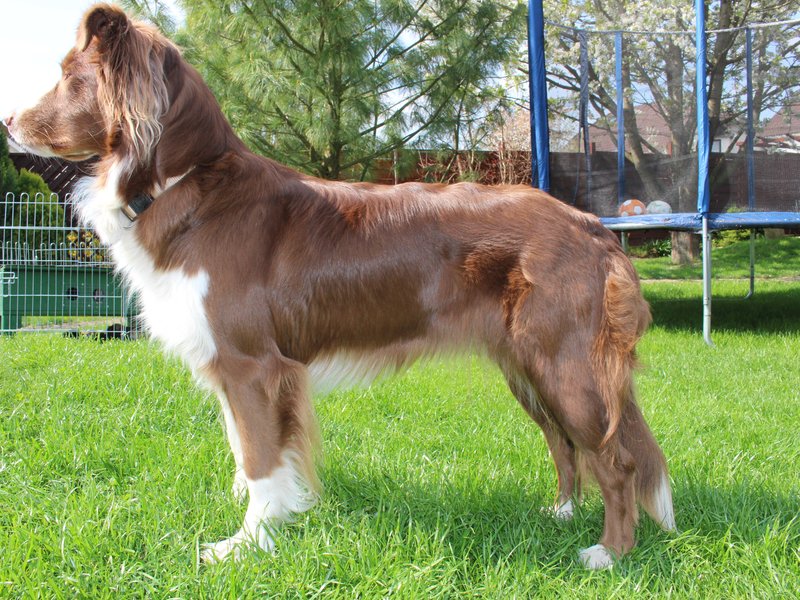
Australian Shepherd
Size
medium
Weight
40-65 lbs
Height
18-23 inches
Lifespan
12-15 years
Activity Level
Grooming
The Australian Shepherd is a stunning paradox: a breed named after a country it did not come from, beloved as a family pet despite being bred for relentless, all-day work. With their striking merle coats, mesmerizing eyes (often two different colors), and razor-sharp intelligence, Aussies have surged in popularity over the past two decades — consistently ranking among the top 15 AKC breeds. If you are bringing one home, our first week with your new puppy guide covers the essentials for starting off right.
But the Australian Shepherd is not a dog you can simply admire and casually own. This is a working breed with a job-oriented brain that runs constantly — and if you do not give it a job, it will create one for itself. Understanding what makes an Aussie tick is the difference between a remarkable companion and a household disaster. This guide covers everything you need to know.
History and Origins
The Australian Shepherd was developed in the western United States during the 1800s, refined by ranchers and cowboys who needed a versatile, tireless herding dog capable of managing sheep, cattle, and other livestock across vast, rugged terrain.
The breed’s ancestry is a blend of herding dogs from multiple origins. Basque shepherds who emigrated from Australia to the American West brought herding dogs with them, and these dogs were crossed with other herding breeds already in the region — likely including Collies, Border Collies, and various European herding dogs. The resulting breed was so closely associated with the Basque shepherds from Australia that the name stuck.
American ranchers valued the Aussie for its remarkable versatility. Unlike breeds developed for a single task, the Australian Shepherd could herd, guard the homestead, serve as a ranch hand’s companion, and adapt to whatever job needed doing. This versatility became a defining characteristic.
The breed gained wider public attention through rodeo performances and trick dog shows in the mid-20th century. Jay Sisler, a rodeo performer, showcased his brilliant Australian Shepherds to audiences across the country, demonstrating the breed’s extraordinary trainability and intelligence. The AKC officially recognized the Australian Shepherd in 1993, relatively late compared to many breeds, partly because Aussie breeders had long preferred to maintain the breed’s working ability over show ring conformity.
Today, the Australian Shepherd excels as a family companion, agility champion, therapy dog, search and rescue dog, and — still — a working ranch hand on farms and ranches throughout the West.
Temperament and Personality
What Makes Australian Shepherds Special
Extraordinary intelligence. The Australian Shepherd is consistently ranked among the top 10 most intelligent dog breeds. They learn new commands with remarkable speed, often mastering complex behaviors in just a few repetitions. This intelligence extends beyond simple obedience — Aussies are genuine problem-solvers who analyze situations and make decisions independently.
Intense loyalty. Aussies form deep, powerful bonds with their owners. They want to be with you, working alongside you, participating in whatever you are doing. This loyalty creates an incredibly strong human-dog relationship — many Aussie owners describe their dog as their shadow, following them from room to room and watching them intently.
Versatile athletes. Few breeds can match the Aussie’s athletic versatility. They dominate agility competitions, excel in herding trials, perform brilliantly in dock diving, flyball, and disc dog competitions, and are natural hiking and running partners. Whatever physical activity you enjoy, an Aussie can probably do it — and outperform you.
Protective instincts. Unlike the indiscriminately friendly Golden Retriever, Aussies are more reserved with strangers and have moderate protective instincts. They will alert you to visitors and may be initially cautious with unfamiliar people. This makes them better watchdogs than many breeds, though they are not aggressive.
Work ethic. The Aussie’s drive to work is deeply satisfying to channel and awe-inspiring to witness. Give an Australian Shepherd a job — any job — and they will execute it with focus, intensity, and joy. This work ethic translates beautifully into dog sports, advanced obedience, and any structured activity.
Potential Challenges
Herding instinct directed at people. Aussies will try to herd children, other pets, joggers, cyclists, and anything else that moves. This manifests as chasing, circling, and nipping at heels. It is instinct, not aggression, but it must be managed through training and appropriate outlets.
Velcro dog tendencies. That intense loyalty can cross into separation anxiety. Aussies do not handle being left alone for extended periods. They need a household where someone is present for a significant portion of the day, or arrangements must be made for company. Read our dog separation anxiety guide for management strategies.
Demanding energy levels. An Australian Shepherd that does not receive adequate physical and mental exercise will channel its energy into destructive behaviors — chewing, digging, excessive barking, and increasingly creative escape plans. This breed needs more than a casual daily walk.
Reactivity. Some Aussies develop reactivity toward other dogs or unfamiliar stimuli, particularly if they are under-socialized. Early, extensive socialization during the 8-16 week period is critical for developing a well-adjusted adult dog.
Care Needs
Exercise Requirements
The Australian Shepherd’s exercise needs are among the highest of any breed. Plan for:
- Minimum: 1.5-2 hours of vigorous exercise daily
- Ideal: 2+ hours, combining physical activity with mental challenges
- Best activities: Herding, agility, frisbee, running (on-leash or in fenced areas), hiking, swimming, advanced obedience, nose work, flyball, dock diving
- Mental exercise: Puzzle toys, training sessions, scent work, trick training
The key insight is that physical exercise alone is not enough. An Aussie can run for two hours and still be wired if their brain has not been engaged. Combining physical exercise with mental challenges — like trail runs where the dog practices obedience commands, or agility courses that require problem-solving — is the most effective approach.
For a detailed comparison of how the Aussie’s needs stack up against other breeds, see our exercise requirements by breed guide.
Grooming
Australian Shepherds have a medium-length double coat that is surprisingly manageable for a long-coated breed:
- Brushing: 2-3 times per week with a slicker brush and undercoat rake. Daily during spring and fall shedding seasons. Our dog grooming tips guide covers proper technique for double-coated breeds.
- Bathing: Every 6-8 weeks or as needed. Use a coat-appropriate shampoo that does not strip natural oils.
- Mats and tangles: Check behind the ears, under the armpits, on the legs, and around the collar area regularly. These are common matting spots. Address tangles promptly with a detangling spray and slicker brush.
- Nail trimming: Every 2-3 weeks.
- Ear cleaning: Weekly, especially for Aussies that swim frequently.
- Dental care: Brush 3+ times per week minimum. Our dog dental care guide provides a complete routine.
Like the Siberian Husky, never shave an Australian Shepherd’s double coat. The undercoat provides insulation in both hot and cold weather, and shaving can permanently damage the coat’s texture and regrowth pattern.
Nutrition
Australian Shepherds are high-energy dogs that need quality nutrition to fuel their active lifestyles:
- High-quality protein: Real meat as the first ingredient is essential. These dogs burn significant calories and need quality protein for muscle recovery and maintenance. Our Blue Buffalo Life Protection review covers a balanced option with joint support.
- Joint support: Given the breed’s predisposition to hip and elbow dysplasia, look for foods containing glucosamine and chondroitin, or supplement with a veterinary-recommended joint supplement.
- Omega fatty acids: Support coat and skin health and provide anti-inflammatory benefits for an active breed.
- Appropriate calories: Active working Aussies may need more calories than companion Aussies getting moderate exercise. Adjust portions based on your dog’s activity level and body condition. See our guide to choosing dog food for expert nutritional guidance.
- MDR1 awareness: If your Aussie carries the MDR1 mutation, discuss dietary considerations with your veterinarian, as some supplements and ingredients may interact with this sensitivity.
Health Considerations
Australian Shepherds are generally healthy dogs with good longevity (12-15 years), but several breed-specific health concerns require attention:
Hip and Elbow Dysplasia: Joint malformation leading to arthritis and mobility issues. Reputable breeders screen with OFA evaluations. Maintaining a healthy weight and supporting joint health through nutrition and supplements helps manage risk.
MDR1 Gene Mutation: This is the most important breed-specific health concern for Aussie owners. Approximately 50% of Australian Shepherds carry the MDR1 mutation, which causes dangerous sensitivity to certain medications. A simple DNA test (available through Washington State University’s veterinary clinical pharmacology lab) identifies the mutation. Every Australian Shepherd should be tested, and the results shared with your veterinarian so that safe medication alternatives can be used.
Eye Conditions: Collie Eye Anomaly (CEA) and cataracts occur in the breed. CEA is a congenital condition that reputable breeders screen for. Annual ophthalmologic exams are recommended.
Epilepsy: Seizures of unknown cause occur at higher rates in Australian Shepherds than in many breeds. Epilepsy is typically manageable with medication, but it is a lifelong condition that requires veterinary monitoring.
Autoimmune Conditions: Aussies are predisposed to several autoimmune disorders, including autoimmune thyroiditis and autoimmune hemolytic anemia. Regular veterinary checkups help with early detection.
Training Tips for Australian Shepherds
Training an Aussie is a deeply rewarding experience — their intelligence and desire to work make them one of the most trainable breeds. However, that intelligence demands a thoughtful approach:
-
Start early and never stop. Begin socialization and basic obedience training at 8 weeks. But unlike some breeds that “graduate” from training, Aussies benefit from lifelong learning. Teach new tricks, advance through obedience levels, and introduce new activities regularly. Our puppy socialization guide covers the critical early weeks.
-
Provide a job. Aussies need purpose. If you do not have livestock to herd, channel their work drive into dog sports, advanced obedience, trick training, or structured activities. An Aussie with a job is a happy Aussie.
-
Use positive reinforcement. Aussies are sensitive and respond poorly to harsh corrections. Positive methods — treats, toys, praise, and play — build enthusiasm and confidence. Punishment-based methods create anxiety and can trigger reactivity.
-
Manage the herding instinct. Teach a rock-solid “leave it” and redirect herding behavior toward appropriate outlets. Herding balls, treibball (a sport where dogs herd large exercise balls), and structured games channel the instinct constructively.
-
Challenge their minds. Standard obedience gets boring fast for an Aussie. Introduce novelty through trick training, scent work, agility sequences, and puzzle toys like the KONG Classic and Outward Hound Fun Feeder.
-
Socialize extensively. Expose your Aussie puppy to a wide variety of people, dogs, environments, sounds, and experiences. Well-socialized Aussies are confident and adaptable. Poorly socialized Aussies can become fearful, reactive, and difficult to manage.
Is an Australian Shepherd Right for You?
An Aussie Is a Great Fit If:
- You are an active person who exercises vigorously for 2+ hours daily
- You want a dog that can participate in sports, hiking, running, or ranch work
- You enjoy dog training and want a breed that thrives on learning
- You work from home or have flexible hours (Aussies need companionship)
- You have a securely fenced yard for off-leash play
- You want a loyal, attentive dog that bonds deeply with its owner
- You are willing to invest time in mental enrichment in addition to physical exercise
An Aussie May Not Be Right If:
- You have a sedentary lifestyle or limited time for daily exercise
- You work long hours away from home
- You want a calm, low-energy dog that is happy with a daily walk
- You have small children and are not prepared to manage herding behavior (nipping at heels)
- You live in a small apartment without easy access to large exercise areas
- You are a first-time dog owner without plans to work with a professional trainer
- You want a dog that is friendly and relaxed with all strangers (Aussies are more reserved)
You Might Also Like
- German Shepherd Breed Guide — A similarly intelligent working breed with different protective instincts
- Golden Retriever Breed Guide — A more easygoing alternative for active families
- Labrador Retriever Breed Guide — Compare two popular, active family breeds
- Siberian Husky Breed Guide — Another high-energy breed with a very different personality
- Best Dog Toys for Aggressive Chewers — Durable toys for active, strong-jawed Aussies
- Exercise Requirements by Breed — See how the Aussie compares to other active breeds
- Dog-Friendly Hiking Trails Guide — Aussies make exceptional trail companions
Frequently Asked Questions
Recommended Products for Australian Shepherds
Barking Goods is reader-supported. When you buy through links on our site, we may earn an affiliate commission at no extra cost to you. As an Amazon Associate I earn from qualifying purchases. Learn more.
Blue Buffalo Life Protection Formula
Provides balanced nutrition with glucosamine for joint support, which is important for this highly active breed prone to hip and elbow dysplasia. Real chicken as the first ingredient fuels their intense energy levels.
Furminator Undercoat Deshedding Tool (Medium, Long Hair)
Australian Shepherds have a thick double coat that sheds year-round and heavily during seasonal changes. The Furminator removes loose undercoat efficiently without damaging the water-resistant topcoat.
KONG Classic (Medium/Large)
Aussies need mental stimulation as much as physical exercise. A frozen stuffed KONG provides a food puzzle challenge that can occupy this intelligent breed for extended periods.
Outward Hound Fun Feeder Slow Bowl
Slows down fast eaters and provides mental enrichment at mealtime. The maze-like ridges turn eating into a problem-solving exercise -- perfect for a breed that craves cognitive challenges.
Health Considerations
- Hip dysplasia
- Epilepsy
- Eye conditions (cataracts, CEA)
- MDR1 gene mutation (drug sensitivity)
- Autoimmune conditions
- Elbow dysplasia
Always consult with your veterinarian about your dog's specific health needs.
Related Breeds
Frequently Asked Questions
Are Australian Shepherds good for first-time dog owners?
How much exercise does an Australian Shepherd need?
Do Australian Shepherds shed a lot?
What is the MDR1 gene mutation, and why does it matter?
Do Australian Shepherds herd children and other pets?
Are Australian Shepherds actually from Australia?
Get Expert Pet Tips in Your Inbox
Join 10,000+ pet parents. Get weekly product picks, care tips, and exclusive deals delivered straight to your inbox. No spam, unsubscribe anytime.
No spam. Unsubscribe anytime.

Written by
Dr. Sarah ChenVeterinary Editor, DVM
Dr. Sarah Chen is a licensed veterinarian with over 10 years of clinical experience in small animal medicine. After earning her Doctor of Veterinary Medicine degree from Cornell University, she spent seven years in private practice before transitioning to veterinary journalism and pet product education. As Barking Goods' Veterinary Editor, Dr. Chen reviews all health and nutrition content for accuracy and ensures our recommendations align with current veterinary science. She's a Certified Veterinary Journalist and a member of the American Veterinary Medical Association (AVMA). When she's not reviewing content, she volunteers at her local animal shelter and spoils her two rescue dogs, Mochi and Biscuit.