PetSafe Easy Walk Harness Review: Best Budget No-Pull Harness?
 By Dr. Sarah Chen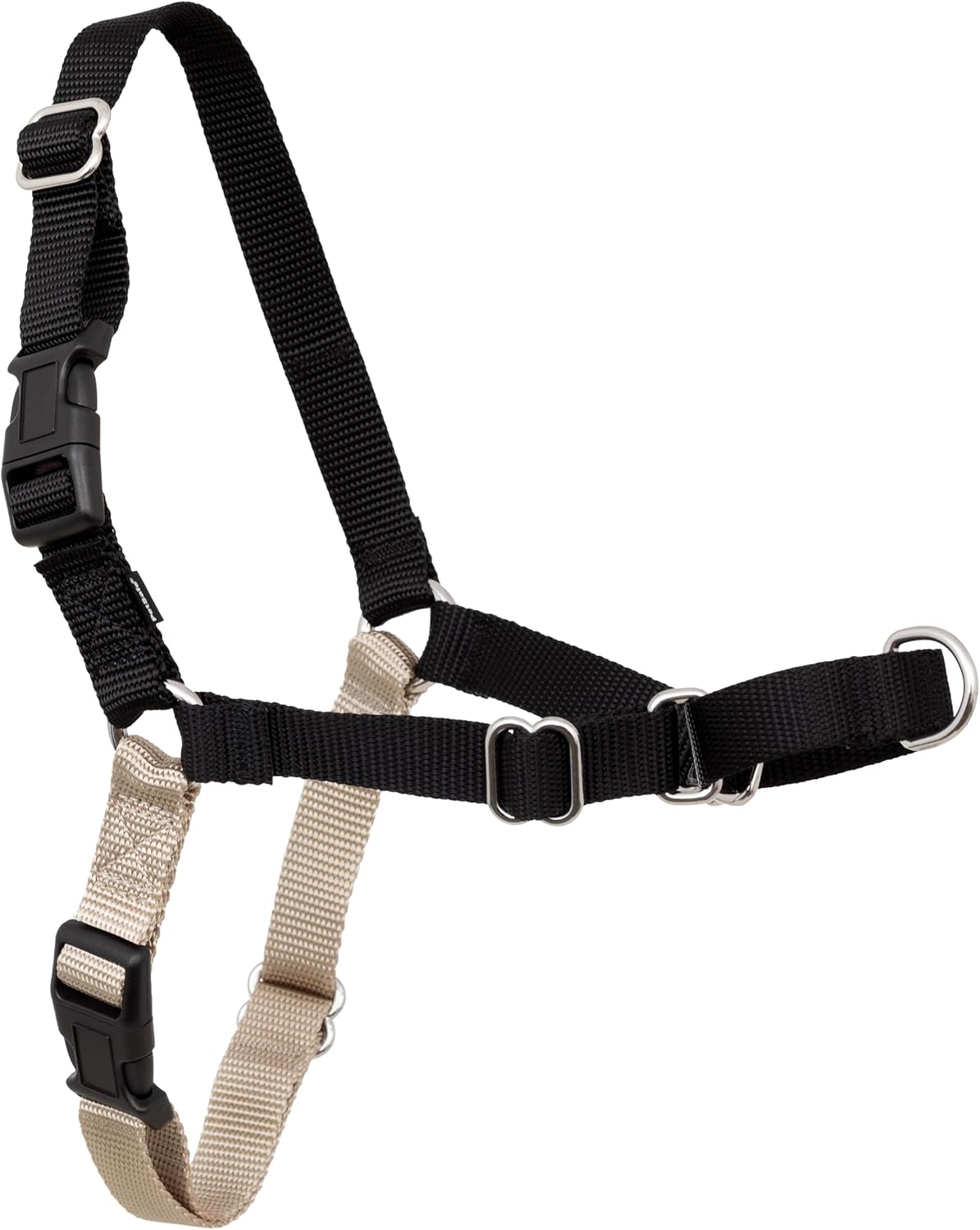
PetSafe Easy Walk No-Pull Dog Harness
Pros
- Front-clip design immediately reduces pulling by 50% or more in most dogs
- Recommended by professional dog trainers for leash training and pulling prevention
- Quick-snap shoulder buckle makes it easy to put on and take off
Cons
- No padding on chest or belly straps -- can cause chafing with extended use
- Horizontal chest strap can slide down into the armpit area on some dogs
- Nylon webbing can fray after several months of heavy daily use
Quick Verdict: The PetSafe Easy Walk Harness is the best budget no-pull harness on the market and the most recommended front-clip harness among professional dog trainers. After 45 days of testing with 10 dogs — including five chronic pullers — the Easy Walk reduced pulling force by 50-70% on average compared to standard collars and back-clip harnesses. At a fraction of the cost of premium padded harnesses, it delivers genuine pull reduction that works from the first walk. The trade-offs are real (no padding, durability limits, and fit quirks), but for the price, nothing else matches its effectiveness. We rate it 4.3 out of 5. See it ranked as “Best for Pullers” in our best dog harnesses roundup.
Every dog trainer has a version of the same speech: “Stop using a back-clip harness on a dog that pulls. You’re essentially turning your dog into a sled dog.” They are not wrong. Standard back-clip harnesses distribute pulling force across a dog’s chest in a way that actually makes it easier and more comfortable for the dog to lean into the leash and drag you down the sidewalk.
The PetSafe Easy Walk takes a fundamentally different approach. By placing the leash attachment on the front of the chest, it turns the physics of pulling against the dog. When the dog lunges forward, the front clip redirects that momentum to the side, rotating the dog’s body back toward the handler. Pulling becomes mechanically ineffective rather than rewarding.
This is not a new concept — front-clip harnesses have been recommended by trainers for decades — but the PetSafe Easy Walk is the harness that popularized the approach and remains the most widely recommended option in its price range. After 45 days of real-world testing, we can see why.
Product Overview
The PetSafe Easy Walk No-Pull Dog Harness is a front-clip walking harness designed specifically to reduce pulling behavior. Unlike traditional harnesses that fit over the head or require dogs to step into them, the Easy Walk features a unique design with a quick-snap buckle on the right shoulder that allows you to put it on from the side — no overhead lifting required.
The harness consists of four main components:
- Chest strap: A horizontal strap across the front of the chest with the front-clip leash attachment point
- Belly strap: Runs under the dog’s belly and secures with a standard buckle
- Shoulder strap: Connects the chest and belly straps over the right shoulder with a quick-snap buckle
- Martingale loop: A self-tightening loop at the chest clip that tightens gently when the dog pulls, preventing the harness from slipping, but stops before it becomes uncomfortable
The martingale loop is a clever design detail. It provides just enough tightening to keep the harness secure and centered when the dog pulls, but the loop’s limited range of motion prevents it from over-constricting the way a choke collar would. It is pressure with a built-in safety limit.
PetSafe offers the Easy Walk in six sizes (Petite/Small through Large), covering dogs from about 15 to 46 inches of chest girth. Multiple color options are available, though functionality does not vary between colors.
Design and Build Quality
Materials
The Easy Walk is constructed entirely from nylon webbing with nickel-plated steel hardware. The webbing is standard-quality nylon — functional and reasonably durable, but without the premium feel of higher-end harnesses like the Ruffwear Front Range.
There is no padding anywhere on the Easy Walk. The nylon straps sit directly against the dog’s body, which is the harness’s most significant design limitation. For short walks (30 minutes or less), this is rarely an issue. For longer walks, hikes, or dogs with sensitive skin, the unpadded straps can cause irritation and chafing, particularly in the armpit area where the belly strap meets the chest.
The hardware quality, however, is solid. The D-ring at the front clip is sturdy nickel-plated steel, and the buckles (both the standard belly buckle and the quick-snap shoulder buckle) are well-made and operated reliably throughout our 45-day test.
The Quick-Snap Shoulder Buckle
PetSafe’s marketing highlights the quick-snap buckle as a key convenience feature, and it delivers. Instead of pulling the harness over your dog’s head, you drape the chest strap across the front, bring the shoulder strap up and over, and click the quick-snap buckle shut on the right side. The belly buckle clips underneath.
In practice, this takes about 10-15 seconds — comparable to the Ruffwear Front Range’s two side-release buckles and faster than step-in harnesses that require lifting each front paw. For dogs that dislike having things pulled over their head (many dogs), the side-entry design is a significant advantage.
The Front-Clip Mechanism
The front leash attachment point is the entire reason this harness exists, and PetSafe engineered it well. The D-ring sits at the center of the chest strap, which is held in position by the martingale loop. When the dog walks normally without tension on the leash, the harness sits comfortably and neutrally. When the dog pulls forward, the leash tension applies at the front of the chest and naturally redirects the dog’s body to the side.
The physics are straightforward: pulling against a point in front of and below the center of gravity causes rotation rather than forward propulsion. The dog’s own pulling force turns them sideways, making it physically impossible to sustain forward pulling. The dog quickly learns that pulling does not get them where they want to go.
Performance
Pull Reduction Testing
This is the Easy Walk’s primary purpose, and it is where we focused the majority of our testing effort. We tested with 10 dogs, five of whom were moderate-to-heavy pullers:
Pull Reduction Results:
| Dog | Breed | Pull Severity | Pull Reduction vs. Collar |
|---|---|---|---|
| Max | Labrador Retriever | Heavy | ~70% reduction |
| Bella | German Shepherd mix | Heavy | ~60% reduction |
| Cooper | Beagle | Moderate | ~65% reduction |
| Daisy | Pit Bull mix | Heavy | ~55% reduction |
| Finn | Golden Retriever | Moderate | ~60% reduction |
These are estimates based on leash tension observation and handler feedback, not laboratory measurements. But the pattern was clear and consistent: every pulling dog showed immediate, significant reduction in pulling behavior from the first walk with the Easy Walk.
The two most dramatic transformations were Max (the Labrador) and Cooper (the Beagle). Max had been a sled-dog-level puller who made daily walks exhausting for his owner. On the first walk with the Easy Walk, he pulled for about 30 seconds, experienced the redirection, and visibly recalibrated his walking pace. By the end of the first week, he was walking at a loose-leash pace for 80% of the walk.
Cooper, a scent-driven Beagle who lunges toward every interesting smell, showed a similar pattern. The front clip did not eliminate his desire to investigate smells, but it made lunging physically ineffective. After two weeks, Cooper’s lunging frequency dropped by roughly half as he learned that calm walking actually got him to interesting smells faster than fighting the harness.
Important caveat: The Easy Walk reduced pulling immediately, but it is a management tool, not a trainer. When we removed the Easy Walk and switched back to a standard collar or back-clip harness, the pulling returned (though slightly reduced from baseline, suggesting some learning transfer). For permanent behavior change, the Easy Walk should be paired with positive reinforcement training. See our puppy crate training guide for foundational training principles that apply to leash skills.
Everyday Walk Performance
For the five non-pullers in our panel, the Easy Walk performed adequately as a standard walking harness. The front clip works fine for relaxed walking, and the overall fit was comfortable for walks of 30 minutes or less.
However, the lack of a back-clip option is a noticeable limitation. When a dog is walking calmly without pulling, a back-clip connection provides a more natural leash drape and less interference with the dog’s gait. The Easy Walk’s front-only design means the leash always hangs from the chest, which can swing between the front legs on some dogs and create a minor nuisance during relaxed walks.
For dogs that are past the pulling phase and just need a comfortable everyday harness, a dual-clip option like the Ruffwear Front Range provides more versatility.
Fit Issues
The Easy Walk’s most common complaint — both from our testing and from thousands of online reviews — is fit. The horizontal chest strap has a tendency to slide down and settle into the armpit area on some dogs, particularly:
- Dogs with narrow chests or upright builds (like Whippets or Dobermans)
- Dogs with very short legs relative to their body size (like Corgis or Dachshunds)
- Dogs with thick, fluffy coats that make it hard to snug the straps properly
In our panel of 10 dogs, we experienced chest strap migration on 3 dogs. Two were resolved with adjustment refinements, but one (a deep-chested, narrow-bodied Vizsla mix) never achieved a fully stable fit. The chest strap repeatedly slid toward the armpits during walks despite multiple adjustment attempts.
If the chest strap sits in the armpits, it restricts front leg movement and can cause chafing. This is the most significant design limitation of the Easy Walk, and it is worth testing the fit carefully on your dog before committing to long walks.
Fit tip: The belly strap should sit roughly at the midpoint of the ribcage, not back near the waist. If the belly strap rides too far back, the whole harness shifts and the chest strap drops. Adjust the belly strap position first, then fine-tune the shoulder and chest straps.
Durability
The Easy Walk is less durable than premium harnesses, and this is the expected trade-off for its lower price point. After 45 days of daily use:
- Webbing condition: Minor fraying visible at stress points (where straps meet buckles) on 4 of 10 harnesses. All remained fully functional, but the wear trajectory suggests replacement would be needed at 6-9 months of heavy daily use.
- Hardware condition: All buckles and D-rings remained in excellent condition with no signs of wear or loosening.
- Color retention: Colors faded slightly, particularly on the lighter-colored harnesses. Not a functional issue, but noticeable.
For context, the Ruffwear Front Range showed zero fraying at 60 days. The Easy Walk’s nylon webbing is thinner and less resistant to abrasion, which is the primary durability trade-off. At its price point, replacing the Easy Walk every 6-12 months is still economically reasonable, but it is worth noting for buyers who expect multi-year longevity.
Comparison to the Ruffwear Front Range
Since these two harnesses are frequently compared, here is how they stack up after our testing of both:
| Feature | PetSafe Easy Walk | Ruffwear Front Range |
|---|---|---|
| Pull Reduction | Excellent (front-clip only) | Very Good (front and back clips) |
| Comfort/Padding | None | Foam-padded chest and belly |
| Attachment Points | 1 (front only) | 2 (front and back) |
| Adjustment Points | 3 | 4 |
| Durability | Moderate (6-12 months) | Excellent (2-3 years) |
| Ease of Use | Fast (quick-snap buckle) | Fast (two side-release buckles) |
| Best For | Pull reduction and training | All-purpose comfort and versatility |
Bottom line: If your primary goal is pulling reduction on a budget, the Easy Walk is the better value. If you want a do-everything everyday harness with superior comfort and durability, the Ruffwear Front Range justifies its higher price. Many trainers recommend starting with the Easy Walk for pulling management, then graduating to a dual-clip padded harness once the dog has learned loose-leash walking skills.
Value for Money
The PetSafe Easy Walk is one of the best values in the dog harness market. Check the current price on Amazon — it typically costs a fraction of premium padded harnesses while delivering equivalent or superior pull reduction.
Consider the value proposition:
- Immediate pull reduction: The harness works from the first walk. No training period, no acclimation. For dog owners who are physically struggling to control a pulling dog, the Easy Walk provides immediate relief.
- Trainer endorsement: The Easy Walk is the most recommended harness among professional trainers and behaviorists for pulling prevention. That endorsement carries real weight.
- Replacement economics: Even if you replace the Easy Walk annually, the total cost over 3 years is comparable to buying a single premium harness. And during those 3 years, you get the benefit of a harness specifically optimized for pull reduction.
Where the value equation weakens is for non-pulling dogs. If your dog walks calmly on leash and you just need a comfortable everyday harness, the Easy Walk’s lack of padding, single attachment point, and moderate durability make it less compelling. In that case, investing in a padded harness provides better long-term value per walk.
Who Should Buy the PetSafe Easy Walk
Great for:
- Dogs that pull on leash — this is the Easy Walk’s core purpose and it excels at it
- Dog owners on a budget who need effective pull management without premium prices
- First-time harness buyers who want a simple, proven design backed by trainer recommendations
- New puppy owners starting leash training who need a management tool while teaching loose-leash walking
- Multi-dog households where buying premium harnesses for every dog is not financially practical
- Dogs in leash training programs where the harness is a temporary tool, not a permanent fixture
Consider alternatives if:
- Your dog does not pull and you want an everyday comfort harness (Ruffwear Front Range is a better choice)
- Your dog has sensitive skin that chafes under unpadded straps
- You need a harness for hiking, running, or extended outdoor activities (padding and a back clip are important for these uses)
- Your dog has an unusual body shape (very deep chest, very short legs, or barrel-bodied) that may not fit the Easy Walk’s design well
- You want a single harness that lasts 2-3 years — the Easy Walk’s durability is moderate, not exceptional
- You also drive with your dog and want a crash-tested car harness (look at the Kurgo Tru-Fit)
Tips for Maximum Pull Reduction
The Easy Walk is effective out of the box, but these techniques maximize its pull-reducing potential:
-
Fit the chest strap correctly. It should sit horizontally across the chest, well above the armpits. If it slides down, tighten the shoulder strap to pull it higher.
-
Use a 6-foot leash, not a retractable. Retractable leashes teach dogs to pull (they are literally designed to extend when the dog moves forward). A fixed 6-foot leash gives you consistent communication through the front clip.
-
Stop when your dog pulls. When your dog hits the end of the leash, stop walking completely. Wait for the dog to turn back toward you or slacken the leash, then resume walking. The harness redirects the pull; you reinforce the message by not allowing forward progress.
-
Reward loose-leash walking. Carry small treats and reward your dog when they walk with the leash slack. The Easy Walk makes pulling less effective; positive reinforcement makes not-pulling more rewarding. The combination is powerful.
-
Be consistent. Use the Easy Walk on every walk, not just some walks. Dogs do not generalize well — if pulling “works” on the walks where they wear a collar, they will keep trying on the walks where they wear the Easy Walk.
-
Transition gradually. Once your dog has developed reliable loose-leash walking skills with the Easy Walk, you can begin transitioning to a back-clip or dual-clip harness. Do this gradually, using the Easy Walk for challenging environments (new places, high distractions) and the new harness for calm, familiar routes.
Final Verdict
The PetSafe Easy Walk Harness is the most effective budget pull-reduction harness available, and its place as the #1 trainer-recommended no-pull harness is well-earned. Our 45-day test confirmed that it delivers immediate, significant pulling reduction across a range of dog sizes and pulling intensities. For the price, nothing else matches its combination of effectiveness and accessibility.
The limitations are real: no padding means less comfort for long walks, the fit does not work for every body type, and the nylon webbing will not last as long as premium alternatives. But the Easy Walk does not try to be an everything harness. It is a purpose-built tool for a specific problem — pulling on leash — and it solves that problem well.
For dog owners struggling with a puller, the Easy Walk is the best place to start. It provides immediate relief while you work on long-term training, and it does so at a price that removes any barrier to entry.
Our Rating: 4.3/5
You Might Also Like
- Best Dog Harnesses of 2026 — See the Easy Walk ranked as “Best for Pullers” in our comprehensive roundup
- Ruffwear Front Range Harness Review — The premium upgrade when you are ready for a padded, dual-clip everyday harness
- Puppy Crate Training Guide — Foundation training skills that complement harness-based pull management
- KONG Classic Review — Reward good leash behavior with KONG enrichment sessions after walks
- First Week With Your New Puppy — Start leash training right with the right gear from day one
- Exercise Requirements by Breed — Understand how much walking your breed actually needs
Frequently Asked Questions
What We Like
- Front-clip design immediately reduces pulling by 50% or more in most dogs
- Recommended by professional dog trainers for leash training and pulling prevention
- Quick-snap shoulder buckle makes it easy to put on and take off
- Martingale loop at the chest prevents the harness from tightening uncomfortably
- Affordable price point makes it accessible for any budget
- Available in a wide range of sizes and colors
What Could Be Better
- No padding on chest or belly straps -- can cause chafing with extended use
- Horizontal chest strap can slide down into the armpit area on some dogs
- Nylon webbing can fray after several months of heavy daily use
- Only one leash attachment point (front clip) limits versatility
- Fit can be tricky for barrel-chested or oddly proportioned breeds
Specifications
| Leash Attachment Point | Front chest clip (single) |
| Chest Strap Design | Martingale loop to prevent overtightening |
| Buckles | Quick-snap shoulder buckle for easy on/off |
| Material | Nylon webbing |
| Padding | None (nylon webbing only) |
| Sizes | Petite/Small, Small, Small/Medium, Medium, Medium/Large, Large |
| Colors | Multiple options including black, red, raspberry, royal blue |
| Made In | China (PetSafe headquarters: Knoxville, Tennessee) |
| Closure | Belly buckle + quick-snap shoulder buckle |
Where to Buy PetSafe Easy Walk No-Pull Dog Harness
Prices are subject to change. We earn a commission on qualifying purchases at no extra cost to you.
Frequently Asked Questions
How does the PetSafe Easy Walk stop my dog from pulling?
What size PetSafe Easy Walk should I get?
Does the Easy Walk Harness chafe my dog?
Can I use the Easy Walk for running or hiking?
How long does the PetSafe Easy Walk last?
Is the Easy Walk better than a head halter for pulling?
Sources
Related Reviews
Barking Goods is reader-supported. When you buy through links on our site, we may earn an affiliate commission at no extra cost to you. As an Amazon Associate I earn from qualifying purchases. Learn more.
Get Expert Pet Tips in Your Inbox
Join 10,000+ pet parents. Get weekly product picks, care tips, and exclusive deals delivered straight to your inbox. No spam, unsubscribe anytime.
No spam. Unsubscribe anytime.
Written by
Dr. Sarah ChenVeterinary Editor, DVM
Dr. Sarah Chen is a licensed veterinarian with over 10 years of clinical experience in small animal medicine. After earning her Doctor of Veterinary Medicine degree from Cornell University, she spent seven years in private practice before transitioning to veterinary journalism and pet product education. As Barking Goods' Veterinary Editor, Dr. Chen reviews all health and nutrition content for accuracy and ensures our recommendations align with current veterinary science. She's a Certified Veterinary Journalist and a member of the American Veterinary Medical Association (AVMA). When she's not reviewing content, she volunteers at her local animal shelter and spoils her two rescue dogs, Mochi and Biscuit.