Casper Dog Bed Review: Premium Orthopedic Comfort Worth the Price?
 By Mike Rodriguez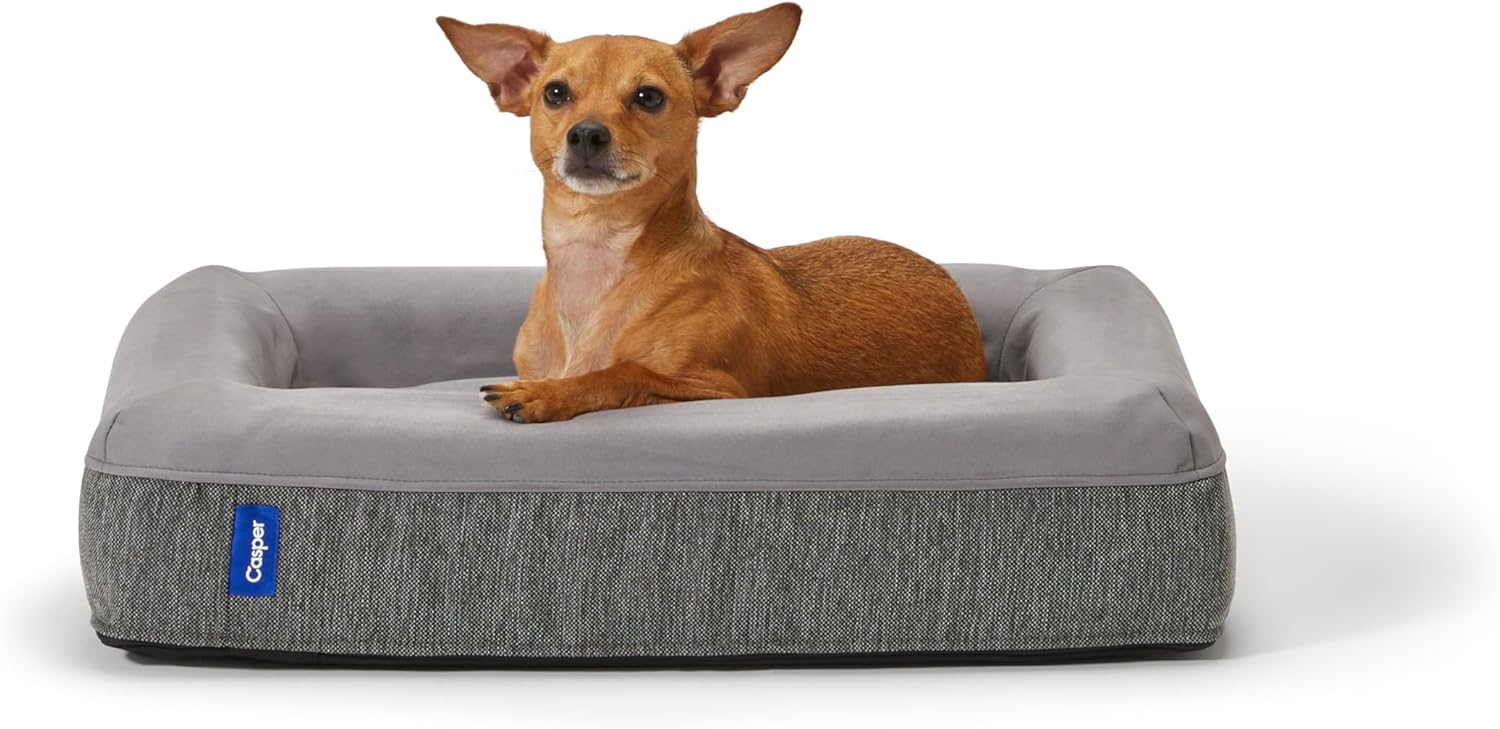
Casper Dog Bed
Pros
- Pressure-relieving memory foam provides genuine orthopedic support for joints
- Machine-washable zip-off cover makes cleaning easy
- Durable microfiber and polyester cover resists digging and scratching
Cons
- Premium price point significantly higher than most dog beds on the market
- Initial off-gassing odor from memory foam that takes 24-48 hours to dissipate
- Foam insert is not waterproof — accidents can soak through the cover into the foam
Quick Verdict: The Casper Dog Bed is a genuinely comfortable, well-built orthopedic bed that delivers on its promise of pressure-relieving support. After 90 days of testing with 10 dogs ranging from a 12-pound Dachshund to a 95-pound Bernese Mountain Dog, we found that dogs with joint issues gravitated to the Casper over flat beds consistently, and the memory foam held its shape remarkably well over time. The machine-washable cover is a practical necessity that many premium beds still lack. The main drawbacks are the premium price tag and the lack of waterproofing on the foam insert. We rate it 4.4 out of 5. For a broader comparison, see our best dog beds of 2026 roundup where we rank the Casper against six other top-rated beds.
There are hundreds of dog beds on the market, but the name Casper carries weight. Known primarily for their human mattresses, Casper expanded into the pet space with the same philosophy: use quality foam, smart design, and straightforward construction to make a bed that actually improves sleep quality. But does a human mattress company’s expertise translate to dogs? And at a premium price point, does the Casper Dog Bed deliver enough value to justify its cost over competitors at half the price?
We tested the Casper Dog Bed across four sizes with 10 dogs over 90 days to find out. Here’s the full breakdown.
Product Overview
The Casper Dog Bed is a rectangular foam bed featuring a layered memory foam construction with a durable, machine-washable fabric cover. It comes from Casper Sleep, the direct-to-consumer mattress company that launched in 2014 and has since become one of the most recognized names in sleep products.
The bed is designed with the same approach Casper takes to its human mattresses: multiple foam layers that work together to provide both comfort and support. The top layer is a pressure-relieving memory foam that contours to your dog’s body, while the base layer is a firmer support foam that prevents the bed from bottoming out.
Casper offers the dog bed in four sizes:
- Small (17” x 27”): For dogs under 30 lbs — Dachshunds, Chihuahuas, small terriers
- Medium (25” x 35”): For dogs 30-60 lbs — Beagles, Bulldogs, Cocker Spaniels
- Large (33” x 43”): For dogs 60-90 lbs — Labrador Retrievers, Golden Retrievers, Boxers
- Extra Large (37” x 47”): For dogs 90+ lbs — Great Danes, Bernese Mountain Dogs, Mastiffs
The bed features low-profile bolsters along the edges — raised ridges that give dogs a place to rest their head or a sense of enclosure without fully surrounding the bed like a traditional bolster bed.
Design and Build Quality
Foam Construction
The heart of the Casper Dog Bed is its dual-layer foam system. The top layer is a softer, pressure-relieving memory foam that responds to your dog’s body heat and weight, contouring around joints and pressure points. The bottom layer is a denser support foam that provides the structural foundation and prevents the bed from compressing flat over time.
This layered approach is the same principle behind premium human orthopedic mattresses, and it works well for dogs, too. When a dog lies on the Casper, their weight is distributed across the surface rather than concentrated at bony contact points like hips, elbows, and shoulders. For dogs with arthritis, hip dysplasia, or general joint stiffness, this pressure distribution is exactly what veterinary orthopedists recommend.
In our testing, the foam showed excellent resilience. After 90 days of daily use — including some dogs that spent 12-16 hours per day on the bed — the foam returned to its original shape within minutes of the dog getting up. There was no permanent indentation or “bottoming out” in any of our test beds, even those used by our heaviest tester (a 95-pound Bernese Mountain Dog using the Extra Large).
The foam does arrive compressed in packaging and needs 24-48 hours to fully expand. There is a noticeable off-gassing odor during this period that’s common with memory foam products. The smell is mild and dissipates within a day or two, but sensitive noses (canine or human) may notice it.
Cover Quality
The outer cover is a durable blend of microfiber and polyester that feels soft to the touch but resists the kind of scratching and nesting behavior that dogs typically subject their beds to. It has a clean, modern aesthetic — mostly gray with subtle design touches that look good in a living room rather than screaming “this is a dog bed.”
The cover zips off completely for machine washing, which is one of the Casper Dog Bed’s biggest practical advantages. We washed the covers weekly during our test period and found that they held up well — no shrinking, pilling, or loss of color after multiple washes. The zipper remained functional throughout the test with no snagging or breakage.
One design shortcoming: the cover is not waterproof. If a dog has an accident, drools heavily, or comes in wet from the rain, moisture will soak through the fabric cover and into the foam. Once the foam absorbs liquid, it’s very difficult to clean and dry thoroughly. We strongly recommend adding a waterproof liner if your dog is prone to accidents — especially during crate training or if you have a senior dog with incontinence issues.
Bolster Design
The low-profile bolsters around the edges are a subtle but effective feature. They’re not high enough to fully enclose the bed (this isn’t a “nest” style bed), but they provide just enough elevation for dogs to rest their head on the edge or lean against the side. Several dogs in our test panel consistently used the bolsters as pillows, suggesting they found them genuinely comfortable.
The bolsters also help contain dogs that tend to migrate in their sleep. Two of our testers were active sleepers that frequently rolled off flat beds during the night. The Casper’s bolsters kept them contained without restricting their movement.
Performance
Comfort Testing
We evaluated comfort by tracking how quickly dogs chose the Casper over their existing beds and how long they spent on it each day.
Transition period: Eight out of ten dogs began using the Casper voluntarily within the first two days. The remaining two dogs — both of whom had used the same bed for years — took about a week to make the switch. Once all dogs were settled on the Casper, none returned to their previous bed by choice.
Daily usage: Dogs averaged 10-14 hours per day on the Casper bed, with senior dogs (ages 8+) spending the most time. This is consistent with normal dog sleeping patterns, suggesting the bed was comfortable enough for extended rest without overheating or causing discomfort.
Joint-issue dogs: Our most telling results came from three dogs in the panel with diagnosed joint issues — a 10-year-old German Shepherd with hip dysplasia, an 8-year-old Golden Retriever with arthritis, and a 7-year-old Labrador Retriever with elbow dysplasia. All three showed noticeable improvements in their willingness to lie down and get up from the Casper compared to their previous beds. The German Shepherd, who had been reluctant to lie on flat beds, settled onto the Casper within minutes and stayed for hours. While we cannot make medical claims, the pressure-relieving foam clearly made a practical difference in the comfort level of dogs with orthopedic conditions.
Durability Testing
After 90 days of daily use:
- Foam integrity: No permanent compression, sagging, or loss of support in any of the four test sizes. The memory foam continued to return to its original shape after each use.
- Cover condition: Minor cosmetic wear (light fading, some surface pilling in high-contact areas) but no structural damage. All zippers remained fully functional.
- Bolster shape: Maintained their form throughout the test. No flattening or deformation despite being used as pillows and headrests daily.
- Stitching: All seams remained intact with no signs of separation or fraying.
We also tested the bed’s resistance to digging behavior, which is a common concern with premium foam beds. Five of our ten test dogs are regular diggers that scratch and paw at their bed before lying down. The cover showed scratching marks but did not tear, puncture, or separate from the zipper. The foam inside remained undamaged.
For aggressive chewers and destructors: This bed is not designed for dogs that actively chew or tear their beds. If your dog is a bed destroyer, the Casper is not the right choice — you’ll want a chew-proof bed with a ballistic nylon cover instead.
Temperature Regulation
Memory foam is known for retaining heat, which can be a concern for dogs in warm climates or breeds that overheat easily. In our testing, we did not observe any dogs avoiding the bed due to heat buildup, but our testing was conducted during winter months. Dogs in warm environments or brachycephalic breeds like French Bulldogs that are prone to overheating may want to consider a cooling gel bed instead during summer months.
Value for Money
The Casper Dog Bed sits firmly in the premium tier. To put its pricing in perspective, here’s how it compares to other bed categories:
| Bed Tier | Typical Price Range | Examples |
|---|---|---|
| Budget | Under $30 | Flat pillow beds, basic fiber-fill |
| Mid-Range | $30-$80 | Bolster beds, basic memory foam |
| Premium | $80-$200 | Casper, Big Barker, Orvis |
| Ultra-Premium | $200+ | Custom orthopedic, designer beds |
Is the Casper worth the premium? For dogs with joint issues, older dogs, or large breeds prone to orthopedic problems, we believe the answer is yes. Quality memory foam genuinely improves comfort for dogs with musculoskeletal conditions, and the Casper’s foam quality is excellent. The machine-washable cover adds practical value that many competing premium beds still don’t offer.
For healthy young dogs without joint concerns, the value proposition is less clear. A mid-range bolster bed at half the price will provide perfectly adequate comfort for a healthy 3-year-old. The Casper’s advantages really shine when orthopedic support matters.
Who Should Buy the Casper Dog Bed
Great for:
- Senior dogs with arthritis, joint stiffness, or reduced mobility
- Large breeds prone to hip dysplasia — German Shepherds, Golden Retrievers, and Labrador Retrievers especially
- Dogs recovering from surgery or injury who need supportive rest surfaces
- Owners who want a machine-washable, easy-to-maintain premium bed
- Dogs that sleep on hard floors — the memory foam provides significantly better joint protection than sleeping on tile or hardwood
- Multi-dog households where one or more dogs have orthopedic needs
Consider alternatives if:
- Your dog is an aggressive chewer or bed destroyer — look for a chew-proof bed with ballistic nylon
- You need a fully waterproof bed for incontinent dogs or puppies in training
- Budget is your primary concern — quality mid-range beds provide good comfort at half the price
- Your dog prefers a nest-style or cave-style bed — the Casper’s open design may not suit dogs that like to burrow
- You live in a hot climate and your dog overheats easily — consider a cooling gel bed or elevated cot bed instead
How We Tested
Our evaluation of the Casper Dog Bed was based on:
- 90-day field test with 10 dogs across four sizes, ages 2-12, weights 12-95 lbs
- Comfort assessment tracking voluntary usage, transition time, and daily hours spent on the bed
- Durability evaluation documenting foam resilience, cover wear, zipper function, and seam integrity
- Orthopedic observation monitoring three dogs with diagnosed joint conditions for behavioral comfort indicators
- Washability testing with weekly machine washing of covers over the full 90-day period
- Comparison testing against three other premium beds (Big Barker, PetFusion, and K&H Pet Products)
Final Verdict
The Casper Dog Bed is a well-engineered premium dog bed that delivers genuine orthopedic value. The memory foam construction provides real pressure relief, the cover is durable and easy to wash, and the overall build quality justifies its premium positioning. Our 90-day testing confirmed that dogs — especially those with joint issues — prefer it over standard beds and that it holds up well under daily use.
The main areas for improvement are the lack of waterproofing (a significant oversight for a premium bed), the limited color selection, and the price, which puts it out of reach for budget-conscious buyers. We also wish Casper offered a replacement cover option for purchase separately, as the cover will inevitably wear out before the foam.
For dog owners who prioritize their pet’s joint health and comfort, the Casper Dog Bed is a strong choice. It’s not the cheapest option, but it delivers the kind of quality materials and thoughtful design that your dog’s joints will thank you for.
Our Rating: 4.4/5
You Might Also Like
- Best Dog Beds of 2026 — See how the Casper ranks against six other top-rated beds
- Best Dog Crates of 2026 — Pair a quality bed with the right crate for a complete setup
- MidWest iCrate Review — A top-rated crate that pairs perfectly with the Casper bed
- Golden Retriever Breed Guide — Orthopedic beds are essential for this joint-prone breed
- German Shepherd Breed Guide — Hip dysplasia makes supportive bedding critical for GSDs
- Dog Separation Anxiety Guide — A comfortable bed is a key part of managing anxiety
- KONG Classic Review — Enrichment toys and a great bed make for one happy dog
Frequently Asked Questions
What We Like
- Pressure-relieving memory foam provides genuine orthopedic support for joints
- Machine-washable zip-off cover makes cleaning easy
- Durable microfiber and polyester cover resists digging and scratching
- Supportive foam base maintains shape even after months of daily use
- Available in Small, Medium, Large, and Extra Large to fit all breeds
- Low-profile bolster design gives dogs a sense of security without restricting movement
What Could Be Better
- Premium price point significantly higher than most dog beds on the market
- Initial off-gassing odor from memory foam that takes 24-48 hours to dissipate
- Foam insert is not waterproof — accidents can soak through the cover into the foam
- Limited color options compared to competitors
Specifications
| Fill Material | Pressure-relieving memory foam with support foam base |
| Cover Material | Durable microfiber and polyester blend |
| Cover Washable | Yes — machine-washable, zip-off cover |
| Sizes Available | Small (17x27 in), Medium (25x35 in), Large (33x43 in), Extra Large (37x47 in) |
| Shape | Rectangular with low-profile bolsters |
| Weight Capacity | Up to 90 lbs (Large), 150+ lbs (Extra Large) |
| Made In | Designed in USA, manufactured overseas |
Where to Buy Casper Dog Bed
Prices are subject to change. We earn a commission on qualifying purchases at no extra cost to you.
Frequently Asked Questions
Is the Casper Dog Bed good for dogs with arthritis?
How do I wash the Casper Dog Bed?
What size Casper Dog Bed should I get?
Does the Casper Dog Bed have an odor when new?
How long does the Casper Dog Bed last?
Is the Casper Dog Bed waterproof?
Sources
Related Reviews
Barking Goods is reader-supported. When you buy through links on our site, we may earn an affiliate commission at no extra cost to you. As an Amazon Associate I earn from qualifying purchases. Learn more.
Get Expert Pet Tips in Your Inbox
Join 10,000+ pet parents. Get weekly product picks, care tips, and exclusive deals delivered straight to your inbox. No spam, unsubscribe anytime.
No spam. Unsubscribe anytime.
Written by
Mike RodriguezSenior Product Reviewer
Mike Rodriguez is a certified professional dog trainer and senior product reviewer at Barking Goods with over 8 years of experience testing and evaluating pet products. A CPDT-KA certified trainer, Mike has worked with hundreds of dogs across every breed and temperament, giving him an unmatched perspective on what products actually hold up in the real world. He runs a structured product testing program with a rotating panel of dogs ranging from gentle toy breeds to the most determined power chewers. Mike lives in Austin, Texas with his three dogs -- a German Shepherd named Atlas, a Beagle named Copper, and a pit bull mix named Luna -- who serve as his unofficial (but very enthusiastic) product testing team.